TRENDS IN HOME DESIGN IN VERMONT
Are you looking to design and build a new home, or a major renovation or addition in Vermont? Are you curious about current trends in modern green home design to consider when working with an architect but do not have the time? While working with recent clients and surveying the marketplace, we have collected together some insights you might find helpful to make that easier. There is a lot going on right now with exciting innovations. Let's look together.
With home design trends, Vermont is well ahead of the curve. As a state, we have always been at the forefront of environmental consciousness and that extends to our homes as well. We see a move away from traditional home design and forms, with an embrace of more modern styles that reflect changing Vermont values. These new designs may be rooted in the traditional forms of Vermont barns, and farmhouses, but look also to modern forms, materials, and approaches fusing together old and new.
MODERN AND GREEN
Across the generations seeking residential architectural design in Vermont and nationally, there is growing interest in modern spirited design from the mid-20th century. Perhaps it is nostalgia for earlier, simpler times or less adorned home design? It is hard to tell. However, this approach and style align well with interest in green eco-conscious home design with a less is more approach.
NATURE NEAR - CONNECTING WITH THE LANDSCAPE
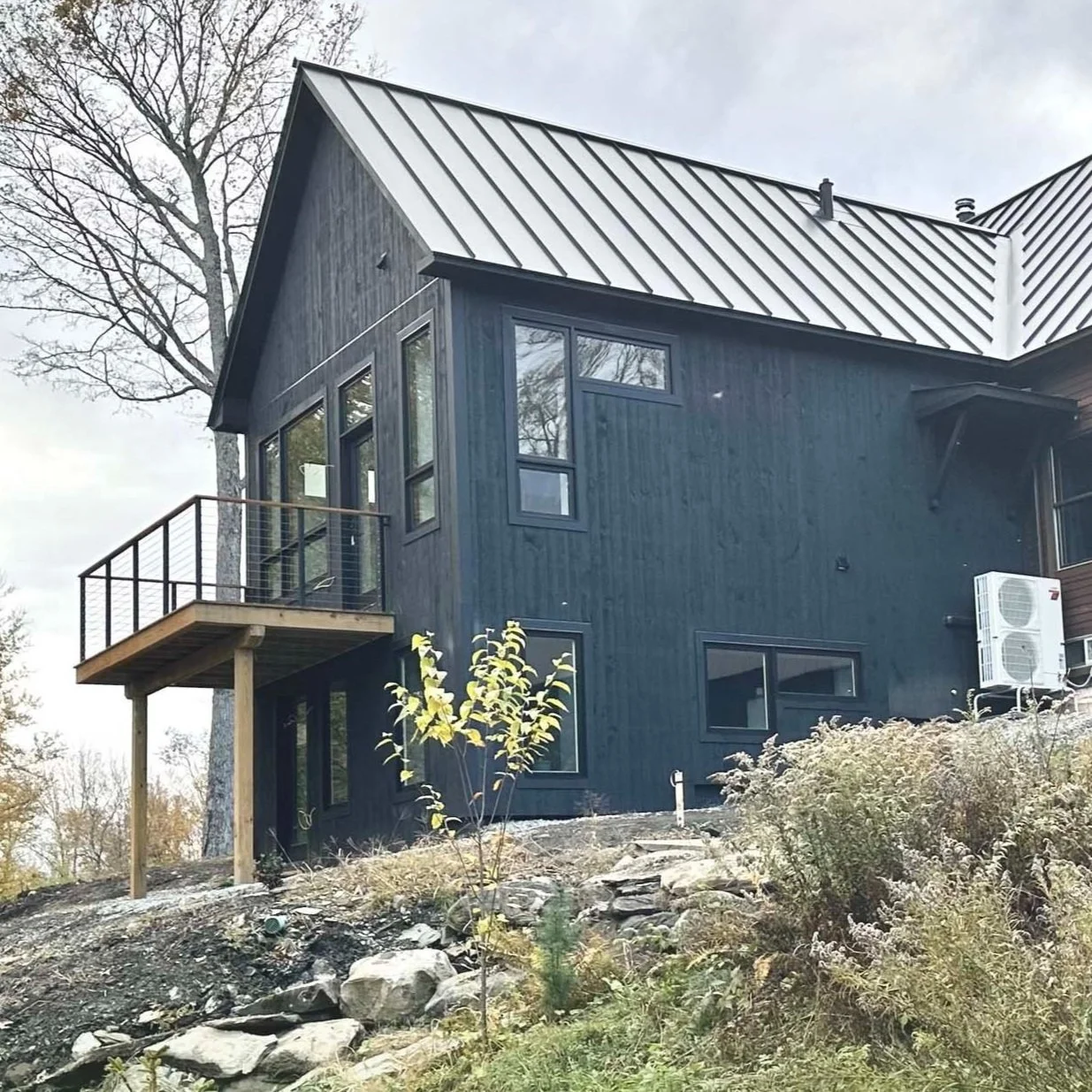
One of the most important aspects of any home design is how it interacts with its surroundings. With its hills, valleys, mountains, and water bodies, Vermont has some of the most beautiful natural scenery in the world. This is especially so in our more rural areas, but also in our cities and villages. In Vermont, take advantage of this to not only fit in but also enhance their surroundings. Some trends to consider are capitalizing on exterior views in interior space and deck design, creating outdoor rooms for leisure and sports activities by planting trees and vegetation and using local fieldstone with native plantings for outside terraces and walls.
SMALLER HOME SIZES
Another recent trend involves homes' size and changing patterns of use. Here in Vermont, we see a move away from large McMansions and a return to smaller, more efficient homes that make the most of their environment. For example, many of the new homes we design range in size from 2 to 4 bedrooms and 1,000 to 2,500 square feet above ground space. See Fieldhouse, Wing-house, and Mountain-Meadow NetZero Ready for examples.
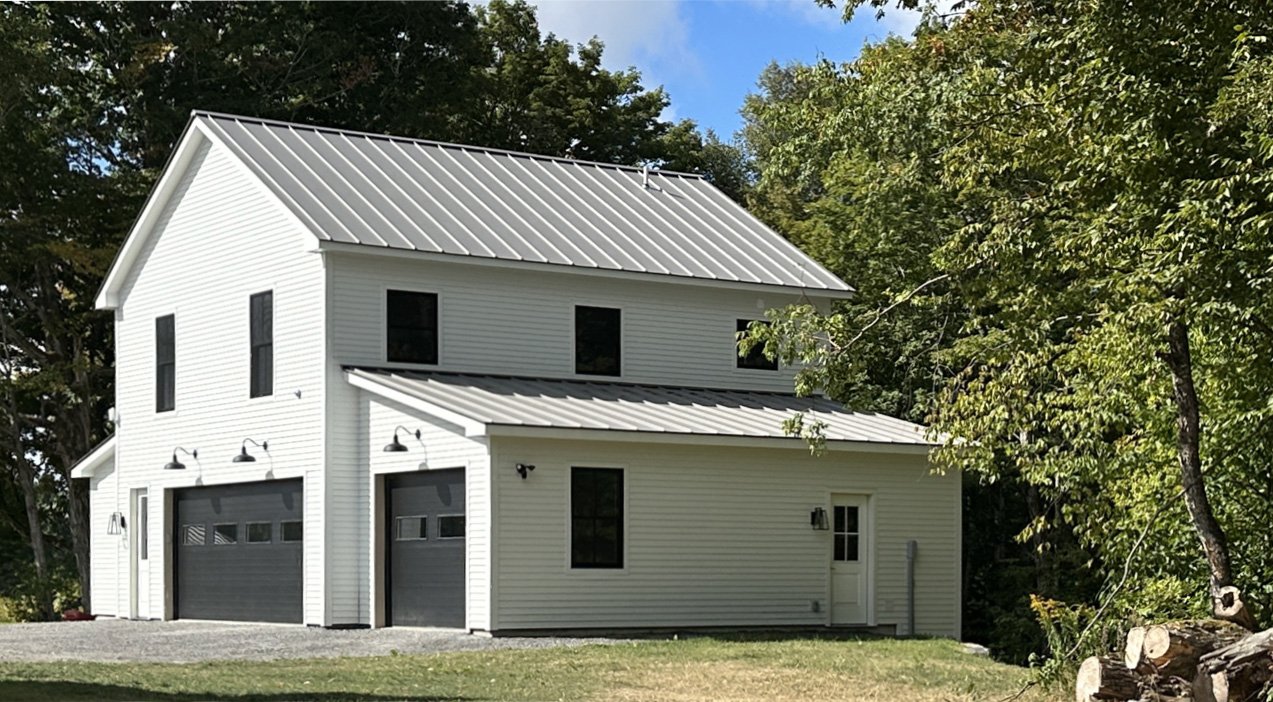
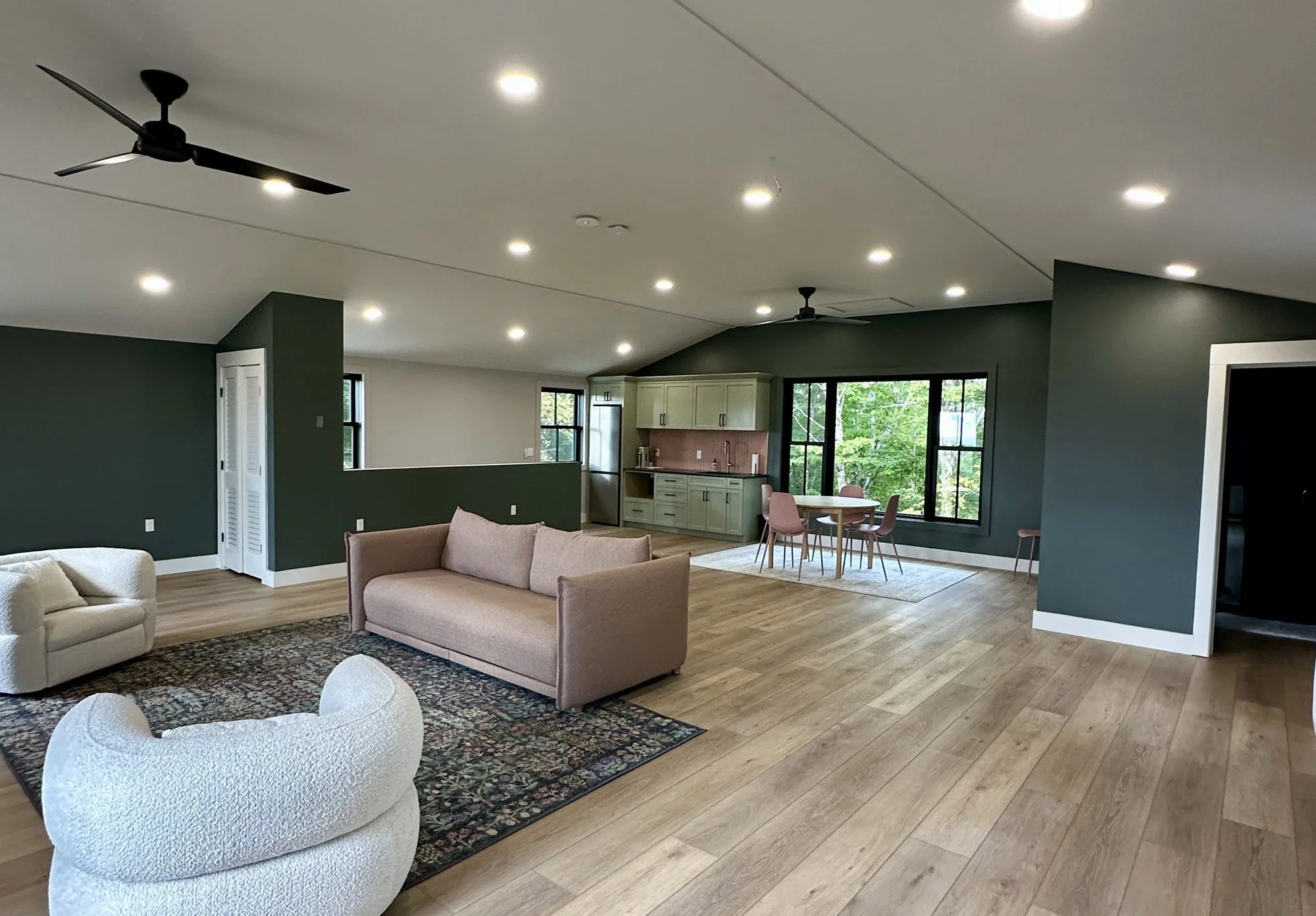
Along with smaller size, with our work with clients, we continue to see a demand for flexible living areas unified by airy open ceilings combining kitchen, dining, and easy-living spaces. Increasingly, clients need to work or do school-type activities at home with the growth of remote work because of the Pandemic. Bonus spaces over garages or in full or partial basements help supply needed space for these new patterns.
CO-LIVING AND ACCESSORY DWELLING UNITS
Another changing home use pattern involves co-living and accessory dwelling units. Also can include multiple generations or siblings together. With Vermont's recent radical increases in housing costs and costs of living, some clients seek to welcome additional family or friends to live with them and share their homes. It is called co-living. This means multiple generations living together under the same roof and sharing resources. This may include older parents coming to live part-time to help with young children, recent working college graduates wanting to save money, or close to retirement age and wanting to downsize from larger homes.
Enhancing co-living options may involve adding to an existing home with a self-contained living unit, or sometimes, a detached accessory dwelling unit. An added side benefit where permitted, homeowners can rent these spaces out to guests for extra income using Airbnb or VRBO or similar.
SMARTER ECO-CONSCIOUS SYSTEMS
With our cold winters and eco-oriented culture in Vermont, there is a big focus on building for energy conservation and energy efficiency. Our residential building code mandates it in fact. The code minimum today is 50% better than it was 20 years ago. This impacts insulation levels of walls, slabs, roofs, windows heating, and cooling systems. With the market and advances in the energy code, we continue to see a move away from traditional heating systems such as oil and propane and towards greener alternatives. They can include geothermal, ground source or air-to-air heat pumps, and solar, with innovations such as whole-home batteries.
The batteries also offer a practical alternative to diesel generators to help power homes during power failures driven by Vermont's weather. With the cost of these systems coming down and builders' familiarity with these systems, it is now more affordable than ever to heat your home sustainably. These systems also help homes be more adaptive to climate change and increase the resiliency of your property.
Those system choices are further improved when combined with better windows and doors, more exterior insulation, and attention to air sealing. Also, whole-home ventilation, and careful attention to selecting low-embodied carbon materials further help to improve comfort, health and wellbeing, and climate-positive integrated design.
Thinking local
Thinking and acting locally is another trend that is also good for the planet and local communities. In the interior of your home, there are many Vermont-made products that can help make your home not only beautiful but also eco-friendly. We continue to see a trend toward using more local and sustainable materials such as wood, stone, paints and coatings, and countertops. In fact, like our world-class scenery, we have world-class local craftspeople and makers that help local builders supply competitively priced custom cabinets, decorative metal railings and fixtures, stonework, lighting fixtures, and more. These materials not only add beauty to your home but also help reduce your carbon footprint and keep dollars in our local communities.
Landscape informed colors
There is also a trend toward using more natural colors and finishes that reflect the Vermont landscape and its four seasons. We are seeing a move away from synthetic materials and towards natural fibers such as wool, cotton, and linen. These materials not only look and feel better but are also better for the environment.
Hybrid building approaches, Stick-built and Prefab
Given the scarcity of local labor, busy firms, and high costs of residential construction, we see the trend continue to embrace mixed approaches to building. This includes the use of prefabricated and modular elements along with traditionally onsite stick-built custom construction. Builders we work with can build more projects at a higher quality level with this approach. Prefab and modular construction offer the option to build portions of a home in the controlled conditions of a factory or shop. This can allow builders to build projects more quickly and or free up onsite staff to focus on higher quality finish work inside the home or around it. We see this trend continuing in the years ahead.