
The Classic Appeal of Modern Farmhouse Architecture in Vermont
What Defines a Modern Vermont Farmhouse?
Form: Steeply pitched roofs (12:12 pitch) to shed heavy snow loads efficiently.
Porches & Connections: Adverse weather and insects require porches, screened in areas and covered walkways, or a directly connected sequence of home, mudroom, garage.
Efficiency: Double-stud wall construction for R-40+ insulation, disguised by traditional vertical siding, triple-pane low-e windows, R-60+ insulation in cathedral ceilings with exposed timber modern inspired construction.
Layout: Open-concept interiors that retain distinct "cozy corners" (a necessity for heating efficiency in cold climates) but with great connections to views and exterior landscape features like terraces, gardens and more.
Where did the modern farmhouse idea orginate?
Modern farmhouses are common in new home construction in Vermont. That is because long ago in the mid-1800 farmers adopted an innovative contemporary style of farmstead design called the connected L or “ell”. It arose in New England then to support a wider range of farming and work activities at the farm and responded well to the harsh cold climate. Examples dot our green mountain state today. That heritage borne on practicality and innovation infuses the spirit of the modern farmhouse designs of today.
Its classic, connected forms attract clients. It also connects to the history and traditions of our working landscape of Vermont. It stays popular because its enduring classic design elements are easy to adapt and are beautiful and comfortable to the eye.
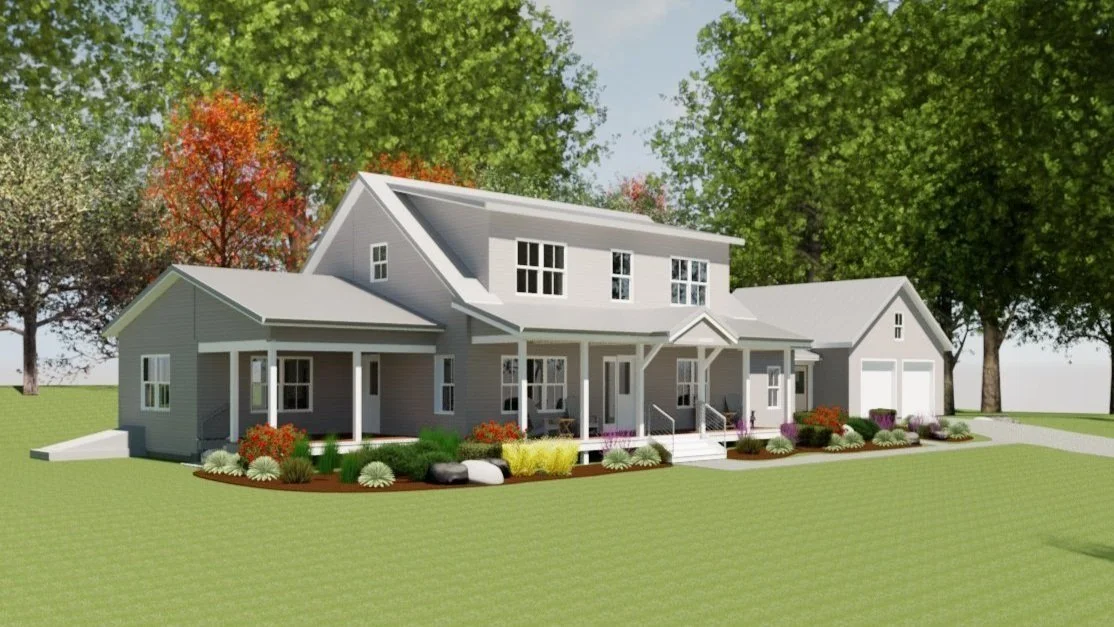
Connected forms for a Vermont Modern Farmhouse
For us, we call it modern farmhouse architecture. It is architecture, not a style because it connects to the art and science of homebuilding design and tradition. And it also has a long past rooted in the Vermont story. It is flexible. With it, we can create solutions with contemporary or traditional design expressions with different exterior and interior planning strategies. It also adapts well to home sites, family living patterns, modern technology, and energy-efficient design. For these reasons, and more, the connected modern farmhouse is a hit with homeowners. That is why we often work with this approach when designing custom modern inspired homes for the families we work with.
Pre-Closing Pre-Purchase Site Feasibility: Considering a similar custom Net-Zero build or prototype adaptation on land you're evaluating in Stowe, Woodstock, or the Upper or MadRiver Valleys? We offer flat-rate site due diligence consultations options to fit different budgets to assess solar performance, site and building planning, septic capacity, and budget alignment prior to closing.
Introduction to the Modern Farmhouse
The modern farmhouse can look and feel like a traditionally connected forebear. Or it can fuse modern forms and spaces with classic home plan layouts. Trends and experience tell us customers often seek designs with flexible open-plan living spaces, multiple generations living together, and work-from-home or homeschooling options.
What options are there for exterior form and appearance?
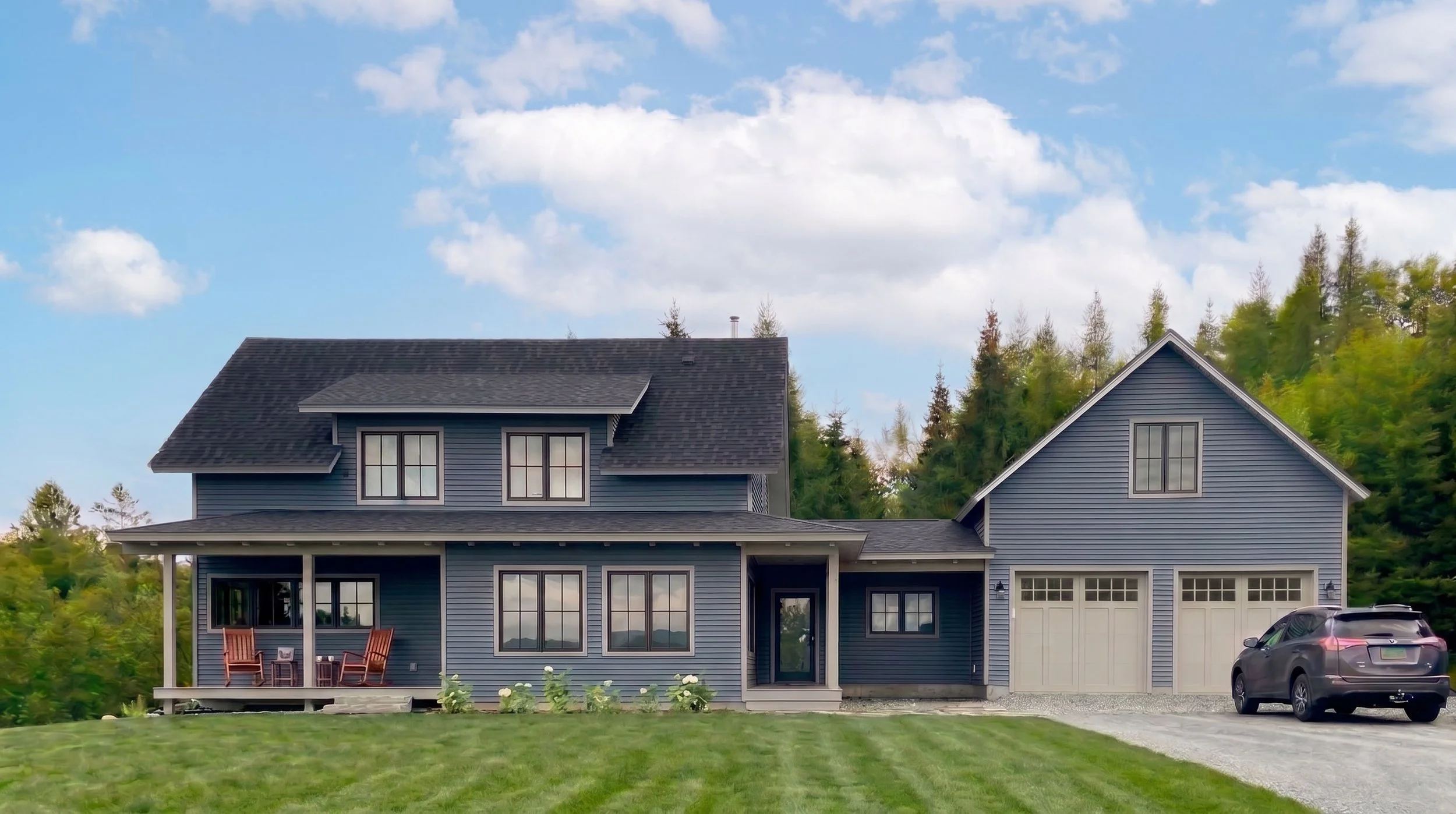
Overall front view of a connected modern-inspired Arocordis Design 3-bedroom all-electric net-zero home.
A modern farmhouse’s exterior features a combination of wood and other construction with exposed timber, stone, and other materials. The roof is usually a classic gable roof, with a wide overhang and a steeper pitch, ranging from 8:12 to 12:12. Windows are large and energy-efficient, and the home usually has a covered porch, a deck, or a series of decks. Window and door placement on the exterior can either follow traditional patterns of symmetry or more modern expressions of interior space use, where the exterior form and openings follow internal functions. Having mullions or muntins in the windows can add to the traditional appearance, or leaving them out, reinforce a more contemporary or modern design approach.
Can you update this thinking to the 21st Century?
We update these homes with 21st-century modern amenities. Those include energy-efficient insulation, windows, doors, and smart air barriers. Add to the mix app-controlled home appliances, lighting, mechanical systems, and other home technologies. Clients also want help to assess if on or off-grid living with net-zero-ready construction suits their needs. That can include solar panels, wells, residential whole home batteries, and secondary generators for long power outages. Installing electric charging stations for all-electric or hybrid electric vehicles has increased in popularity as well, sometimes with powerful upgrades to electrical grid connections required.
Design for flexible spaces and living
Today, the modern farmhouse has fewer fixed walls that support the floor, roof, and ceilings. This helps promote more flexible open-plan living. Changes in family living patterns and advances in energy-efficient construction and heating and cooling technologies support the move towards open spaces as well. Home interiors may have structural or cosmetic exposed timber framing or post and beam or other wood construction like wide-plank floors.
All these aspects inspire our work. The connected modern farmhouse approach has practical origins in sustainable nature tuned design and site planning. This also informs our own home site planning and design work.
Origins in Sustainablity and Practicality
Around the mid-1800s, after other earlier innovations, New England and Vermont farmers built the connected farmstead homes we know and love today. Today’s modern farmhouse architecture is based upon the traditional connected farm style of the big-house, little-house, back-house, barn model that first appeared in New England in the 19th century. The connected buildings housed workspace for various daily farm work activities.
They often built their connected farm buildings around an open farmyard sheltered from the winds. To further protect and shade the homes, farmers often planted groves of trees on the windy side to enhance comfort and protection from the elements. This strengthened the wind buffer and supplied the needed summer shading. Or they looked for home sites with characteristics to adapt to their connected cluster of buildings.
Forgetting about connected buildings and spaces?
Farmers often built their Farmsteads over time, with connected buildings being added as time and money allowed. They often built the insides of their homes with small rooms or as compartments so they could divide them with doors to heat or cool the smaller volumes of spaces. Gratings on the upper floors allow wood heat to rise from the first floor. They did this because the homes had little to no insulation and single-pane glass windows with frigid winter drafts. It also reflected the living patterns of the era with separate spaces for distinct daily use.
Families, friends, and neighbors erected these homes with lumber from local mills and with trees from their land. They used field stone from their land for building foundations and walls either in the home or on the fences demarking their property. The stone often came from their land, remnants of an earlier ice age passing through Vermont with erratic boulders and stones left behind. Or larger foundation stones came from local granite quarries in Barre and elsewhere. Those quarries today more often make grave monuments and exterior building materials for wall cladding, steps, and terrace pavers than they do the foundation stones from the past.
How about Net-zero and Climate-positive options?
The homes in Vermont we design strive to be sized suitably to client needs, net-zero ready. Net-zero means that the homes produce as much energy as they consume with the addition of solar panels in balance with super-insulated homes. Energy-positive means the homes produce more energy than they consume, producing excess that goes back to the local grid during times of peak demands with possible financial incentives back to homeowners. This makes the home climate positive, and helps the local community while reducing homeowner financial risk exposure to spiking energy costs.
Around the state, local power utilities like Green Mountain Power offer homeowners choices to take part in innovative battery storage programs that supply lower-cost energy back to the grid during peak demand times. Homeowners get cash back or credit on their bills. They also supply whole home back up battery options to customers. Depending on where your home or property is, talk to your local power utility about the innovative climate-positive options they offer. They may surprise you.
AIf clients find it hard to connect to the local grid because of site issues or other factors, they may choose to build an off-grid. To provide the power they need, they can take advantage of recent innovations in entire house residential scale batteries like Tesla Powerwall, Enphase IQ, and others. They can combine these with geothermal or air-to-air heat pumps and other systems combined with super-insulated building enclosures that do not require extensive energy to heat or cool.
In our work, we like to find the right level of sustainable design for these factors. That balance depends on the client's budget, home design and performance goals, property location, and site characteristics. No family, site, or project is the same.
What about Authentic and Family-Flexible Living?
It is also extremely authentic and family flexible. Here in Vermont, our descendants built in this way because it was practical for them. Today, modern farmhouse architecture continues to reflect those values while we adapt it to today’s needs. A floor plan of a modern farmhouse is typically open and easy-going, with few hallways and with perhaps a central stairway that allows easy access to the upper floor and basement if there is one. An open floor plan also allows for easy furniture rearrangements and sightlines.
The modern farmhouse is also family flexible from a space use standpoint. We design it to have a separate private living area and an active family area, allowing for space for everyone in the home. The kitchen usually acts as the active family hub around which the other areas key off. They also can have workspaces designed in for those who want to from home occasionally, for homeschooling, or set up a dedicated home office for one or two. The active side often aligns with the south and or west side of the house, with the more private zone on the north or east side and upstairs.
Master bedroom suites can be on the main level to ease later aging-in-place needs or upstairs clustered with other bedrooms. We can design them as a self-contained oasis or just a place to sleep, bathe, and dress. We can also work health and wellness spaces in the private areas of the home to support active choices and healthy living. Throughout this, the flexibility of the modern farmhouse design approach shines.
Decks and Outdoor Living
These homes also feature outdoor living space, with deck, porches, and terraces that supply room to relax and enjoy the outdoors. Homes may feature a large deck or wrap-around porch, with space to entertain or just relax and enjoy the outdoors. Putting them on the south or west sides of a home focused on views to up close woods or far away vistas helps family living, comfort, and connection to our landscape with lawns, play areas, fields, and flower and or vegetable gardens.
Wrapping up
Modern farmhouse architecture is a classic and timeless approach than continues to grow in popularity in Vermont. This is because of its classic design features, its authentic connection to our history and working landscape, and its overall adaptability to changing times. We like to adapt it to the needs of the families we serve because of its flexibility.
We can also design them for clients to build them in phases aligned with the family budget and circumstances. For example, sometimes, the garage with a live-work apartment overhead could start first to supply a home base while the primary home continues after. Then perhaps the connector or mudroom portions follow later. Or the builder can construct all the phases at once.
Want to learn more?
Planning a new custom home design project or a major renovation or addition? Or have questions about the modern farmhouse concept? Reach out to us! Click on the contact us button to tell us more about your needs in our easy-to-fill-out form. Or call us. Happy to talk to you!
Or want to learn about our project portfolio of existing projects either under design, completed, or our prototype houses. Click on the button below to that website area. We hope you enjoy the examples we share there.
Arocordis Design, a custom home architect and planner, has served Vermont families since 2010. We provide licensed architectural services throughout Central Vermont, including Waterbury, Stowe, Montpelier, Calais and beyond. We also serve the Burke, St. Johnsbury, White River Junction, Tunbridge, and the Woodstock regions. We specialize in modern-inspired home design that connects to Vermont’s past while providing a creative climate positive vision for the future.