
The Intuitive Vermont Home: Architecture for Neuro-Inclusion and Aging in Place
A Vermont architect’s guide to creating sensory friendly home environments for Autism, ADHD, multigenerational living, and aging in place.
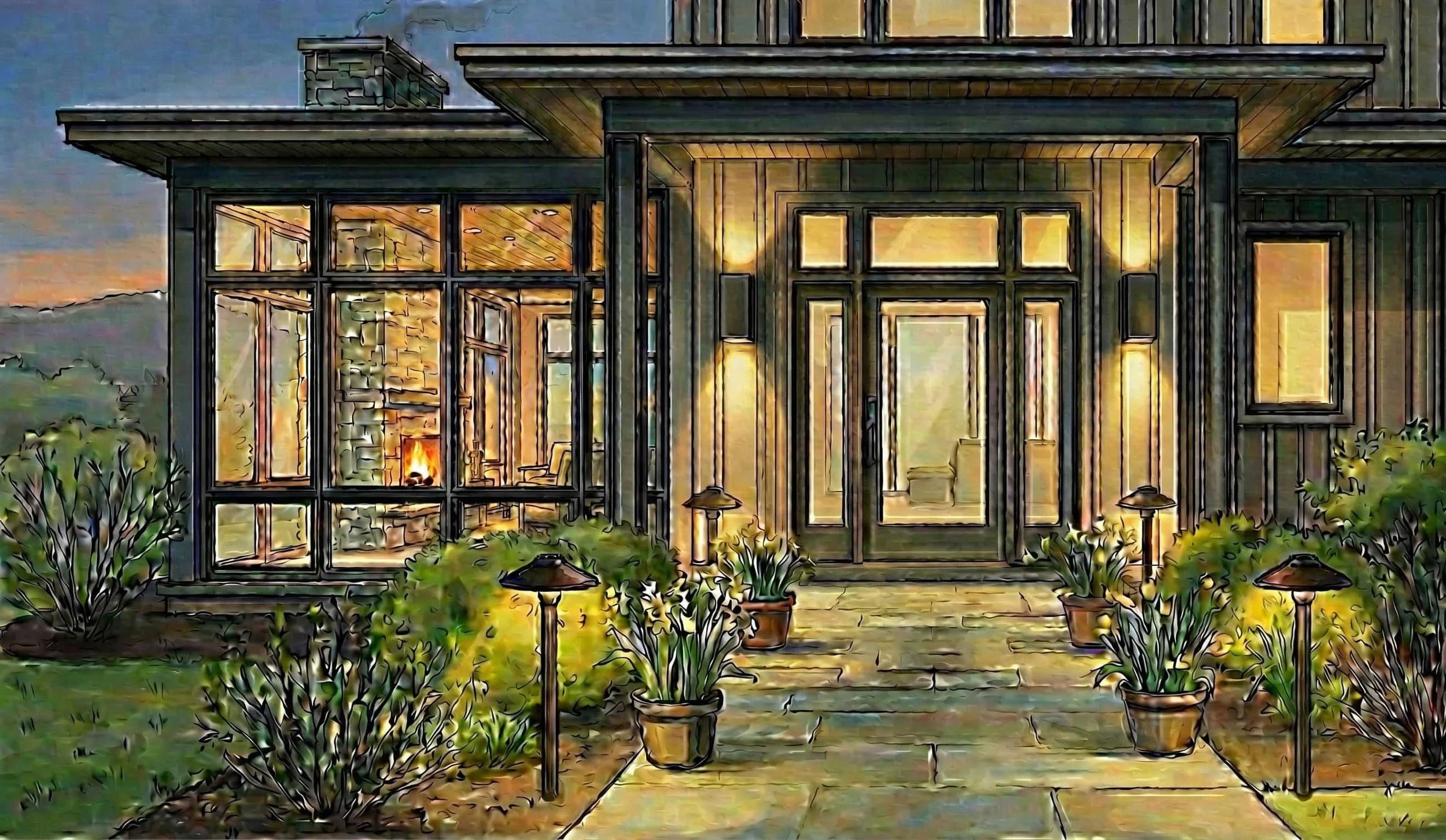
The Calm Arrival: This architectural illustration shows a "Sensory Sanctuary" approach to the front entry. A zero-threshold doorway ensures effortless accessibility for strollers or walkers, while the deep roof overhang provides immediate acoustic and physical shelter. Warm, shielded lighting creates a gentle transition zone without harsh glare, setting a calm tone before entering the home.
Quick Guide: Key Principles of Neuro-Inclusive Home Design
The Core Philosophy: Neuro-inclusive architecture goes beyond physical accessibility (ADA) to address sensory accessibility. It aims to create sensory friendly home environments that support regulation for individuals with ADHD, Autism, dyslexia, and sensory processing differences.
Sensory Zoning: The most effective strategy is creating distinct "high-stimulus" areas (kitchens, playrooms) that are acoustically and visually separated from "low-stimulus" recharge zones (bedrooms, quiet nooks).
The Biophilic Connection: Connecting to nature—both visually through framed views and physically through accessible outdoor spaces—is a powerful tool for sensory regulation and mental well-being at any age.
Flexibility and Longevity: A supportive home must evolve. Features that aid sensory regulation today often double as critical "aging-in-place" features for tomorrow, ensuring the home remains safe and comfortable for decades.
What is neuro-inclusive architecture and why does it matter in Vermont?
For decades, architecture focused on "Universal Design" primarily meant ramps, wide doorways for physical needs and low-physical effort. It also includes flexible, simple and intuitive home use. Today, we understand that true inclusion means designing for the brain as well as the body in a sensory friendly home, expanding those evergreen principles even further.
For families with neurodivergent members—whether a young child newly diagnosed with autism or an older adult with ADHD—the home can cause constant stress or help them thrive. In Vermont, where we spend many months indoors, this matters more. A home that doesn't handle noise, clutter, and light well can quickly cause sensory overload for everyone.
At Arocordis Design, we see the home as a "Sensory Sanctuary." It's more than a place to sleep — it's a living tool: carefully planned indoor and outdoor spaces plus tailored building systems that help calm the nervous system, reduce sensory overload, and restore energy for everyone who lives there.
Pre-Closing Pre-Purchase Site Feasibility: Considering a similar custom Net-Zero build or prototype adaptation on land you're evaluating in Stowe, Woodstock, or the Upper or MadRiver Valleys? We offer flat-rate site due diligence consultations options to fit different budgets to assess solar performance, site and building planning, septic capacity, and budget alignment prior to closing.
How do we design floor plans to manage acoustics and sensory overwhelm?
The open-concept floor plan, popular for years, is often a challenge for neurodivergent brains. The lack of walls means sound travels freely, cooking smells permeate the whole house, and visual clutter is always on display.
We don't have to abandon modern design, but we must introduce "Acoustic Transition Zones" and smarter layouts to create a sensory friendly home:
The "Airlock" Entry: Instead of dumping directly into the kitchen, we design mudrooms that act as a decompression chamber, separating the chaos of arrival from the main living areas.
Zoned living: Use intentional layouts and architectural elements—thick walls, storage/bookcase walls, solid-core doors, and varied ceiling heights—to create acoustic separation between active social areas and quiet retreats that can adapt as family members age.
Strategic Sightlines: We design spaces where parents can passively monitor younger children without hovering, while ensuring older family members have genuine visual privacy.
What are the best lighting strategies for sensory-sensitive family members?
Lighting is often the number one trigger for sensory distress in the home environment. Standard LEDs can have invisible flicker, and harsh overhead lights can cause immediate anxiety or headaches.
A neuro-inclusive lighting plan for the sensory friendly home prioritizes control and natural rhythms:
Dimmability is Non-Negotiable: Every light source in living and bedroom areas needs smooth, deep dimming capabilities.
Warm-Dim Technology: We specify fixtures that get warmer in tone as they dim, mimicking the calming effect of sunset or candlelight, which is crucial for evening wind-down routines.
Indirect vs. Direct: We prioritize indirect lighting (like cove lighting or uplights that bounce off the ceiling) over recessed cans that shine directly into the eyes. Downlights are viable but require deep regression and shielding. This reduces glare and creates a softer, ambient glow.
How do interior finishes affect sensory regulation?
The materials we touch and see every day create the "background hum" of a home. If that background is too "loud" (visually or acoustically), it drains mental energy. We select finishes that lower the sensory load.
Paint Sheen & Glare Control: High-gloss and semi-gloss paints reflect light, creating "hot spots" and glare that can be visually painful for neuro-sensitive eyes.
The Spec: We specify Matte or Flat finishes for all ceilings and walls in living areas. This diffuses light evenly, softening the room. For durability in high-traffic zones (hallways), we use modern "Scuff-X" style matte paints that offer washability without the shine.
Flooring & Acoustics: In Vermont, tile is practical for snow, but it is acoustically "hard" (reflecting noise) and tactilely cold.
The Spec: We prefer engineered hardwood or cork in main living areas for their warmth and sound absorption. Where tile is needed (bathrooms, mudrooms), we may add electric radiant floor heating. Warm floors feel grounding, reduce anxiety, and increase comfort.
Visual Quiet (Low-Contrast Patterns): Highly patterned grain or high-contrast tile patterns can cause "visual vibration." We lean towards clear-grade woods (fewer knots) and large-format tiles with matching grout colors to reduce the "grid effect," creating a visually seamless surface in the sensory friendly home.
What other interior elements aid in internal regulation?
Beyond surfaces, the physical design of built-ins and circulation paths plays a massive role in creating a sense of safety and order.
The "Low-Stimulus" Kitchen: The kitchen is often the most chaotic room. To reduce cognitive load, consider dimmable lighting, simple finishes and patterns, flat or matte finish easy to clean paint sheens. Quiet exhaust fans also help simplify the chaos. We also suggest to design "Appliance Garages" and deep pantry cabinets (floor-to-ceiling units with pull-out trays) to hide visual clutter (toasters, mixers, cereal boxes).
Why it works: When the visual field is clear, the brain doesn't have to process thousands of small objects, lowering background stress levels while cooking.
Stairway Safety & Proprioception: Open-riser (floating) stairs can induce vertigo or anxiety in individuals with proprioceptive (body position) challenges.
The Strategy: We design closed-riser stairs with solid, continuous handrails on both sides. This provides maximum physical security and visual solidity, making the transition between floors feel safe rather than precarious.
Solar Control & Window Coverings: Vermont’s low winter sun reflecting off snow creates intense, blinding glare.
The Spec: For a minimal look, we suggest motorized roller shades get installed and recessed into the ceiling for quick glare control without heavy curtains. Layer them with top-down/bottom-up cellular shades to keep street-level privacy while still letting light in from above. Or, with a more layered setup, hide curtain rods and hardware behind simple valences at the top.
Bedroom Sanctuaries: Sleep is critical for regulation. We design bedrooms for total sensory control:
Blackout Integration: Window framing designed to minimize light gaps for blackout shades.
Solid Core Doors: Using solid wood doors with perimeter seals (drop sweeps) to block household noise from entering the sleep sanctuary.
Sound insulation in interior walls: Add sound insulation at walls party to living areas and specialized wall construction to enhance quiet.
High-Impact Retrofits: Making Changes Without Building New
While custom homes offer the ultimate control, we understand that many families need immediate solutions in their current space. You can apply the "Sensory Sanctuary" philosophy to any home with strategic updates:
Swap Your Bulbs: Replace standard LEDs with "Warm Dim" or 2700K bulbs and install dimmer switches in key transition areas.
Create a "Recharge Nook": You don't need a dedicated room. Identify a quiet corner, add acoustic paneling or soft textiles to dampen sound, and create a designated "low-stimulus" zone where family members can retreat when overwhelmed.
Soften the Acoustics: In existing homes with hard floors, adding thick wool rugs and heavy curtains can significantly reduce the echo that contributes to auditory fatigue.
Dull the sheen by repainting: Repaint walls and trim with existing eggshell or satin or semi-gloss sheens with matte or flat paint finishes. This will reduce the reflective glare from lighting. and soften glancing sunlight and shadows.
Create a sensory room: A calm, safe sensory sanctuary where all ages can explore, relax, and learn to self-regulate or go retreat to. For children, consider their sensory needs, pick suitable decor with equipment, and arrange the room for comfort and safety so it becomes a comforting retreat.
How do we design bathrooms for sensory peace and shared use?
Bathrooms are high-stimulation zones: hard surfaces create echoes, fans hum, water flows, toilets flush, and temperature fluctuates rapidly. For neuro-sensitive individuals, this can be overwhelming.
The Shared Bathroom (Siblings & Guests) The "morning rush" is a prime time for conflict and sensory overload.
The Compartmentalized Layout: Instead of one room with a toilet, tub, and sink, we separate the functions. We place the vanity in an open "transition zone" and put the toilet and shower behind a separate, solid-core pocket door.
The Benefit: One sibling can brush their teeth (low sensory input) while another showers (high sensory input) without the steam, noise, and lack of privacy causing a meltdown.
Acoustic Management: Tile reflects sound, amplifying every drop of water.
The Spec: We suggest you insulate all interior bathroom walls with mineral wool soundproofing (like Rockwool Safe'n'Sound) to dampen plumbing noise. We would also specify "soft-close" toilet seats and cabinetry hardware to eliminate the jarring "bang" of slamming lids and doors.
The Main Bedroom Bath (Partners & Sanctuary) For partners, the main bath needs to balance connection with individual sensory needs.
The "Zero-Entry" (Curbless) Shower: This is the ultimate intersection of Neuro-Inclusive and Aging-in-Place design.
The Design: By eliminating the curb, we remove a trip hazard (essential for aging) and a visual barrier (calming for the brain). It creates a seamless flow of flooring that feels spacious and safe.
The Sensory Spec: We include a handheld shower wand on a slide bar to allow precise control of water flow—critical for those with tactile sensitivity.
The "Silent" Ventilation Strategy: Standard exhaust fans can be deafeningly loud.
The Spec: We specify ultra-quiet, continuous-run fans (e.g., Panasonic WhisperGreen) rated at <0.3 Sones. They are virtually inaudible, maintaining air quality without the sensory assault. Avoid the model with the integral LED lighting, or retrofit with a dimmer. This also helps with whole-house ventilation from a energy efficiency angle.
Circadian Night Lighting: We install motion-activated toe-kick lighting under the vanity to cast a soft, amber glow, keeping the brain in "sleep mode" during middle-of-the-night visits.
Thermostatic Control: Using Thermostatic Mixing Valves prevents the "freeze/scald" shock if someone flushes a toilet elsewhere, providing a predictable experience every time.
How do exterior spaces support sensory regulation and connect to nature?
The need for regulation doesn't stop at the front door. The exterior environment plays a crucial role in how a family functions, offering opportunities for calm and connection. This is also where sensory friendly home design dovetails perfectly with aging-in-place principles.
The Arrival Sequence: Transitions, like getting from the car to the house, can be high-stress moments. We design wide, covered walkways to protect from Vermont weather, and use clear, intuitive path lighting. Crucially, we aim for zero-threshold entries at the main door and garage. This seamless transition is vital for strollers and sensory-overloaded children today, and essential for walkers or wheelchairs tomorrow.
Biophilia and Views: Biophilic design—connecting to nature—is scientifically proven to lower cortisol levels. We strategically place windows with lower sills to frame calming outdoor views, ensuring they are accessible even when seated or lying down. This provides a "soft visual escape" for an overstimulated mind.
Sensory-Safe Outdoor Living: In Vermont, a screened porch is almost essential for sensory-sensitive individuals who cannot tolerate bugs. We design decks with smooth, splinter-free materials and secure railings that offer safety without visually "caging in" the space.
Invisible Boundaries: For family members prone to wandering, we use landscape architecture to create safety without fences. Changing texture underfoot—from smooth pavers on the terrace to crunchy crushed stone at the perimeter—provides immediate proprioceptive feedback that signals a boundary is underfoot.
How can a sensory friendly home adapt to neurodivergent needs at different stages of life?
A successful custom home or renovation is not just for today; it's for the next 20 years. The needs of a neurodivergent 5-year-old differ vastly from those of a 25-year-old or a 65-year-old.
We recommend to design with future flexibility in mind. Today, a "sensory crash room" designed for a young child should have the framing, wiring, and egress windows needed to convert easily into a quiet home office or a semi-independent studio space later. For families thinking long-term, we often would explore incorporating integrated Accessory Dwelling Units (ADUs) into the overall phased plan, providing a path toward semi-independent living for adult children while keeping them connected to the family support system.
A Note on Scope
Please remember: While architectural design can significantly improve quality of life and support sensory regulation, the information provided here is based on architectural best practices and is not intended as medical or therapeutic advice.
Ready to design a home where everyone thrives?
Designing for neurodiversity requires balancing technical precision with deep empathy. It's about creating a modern, beautiful Vermont home that happens to work perfectly for your specific family dynamic.
If these concepts resonate with your family's needs—whether you are planning a new build or looking to retrofit your existing home for better flow—let’s start a conversation. Contact Arocordis Design today to learn how we apply neuro-inclusive thinking to our sensory friendly home projects.
**Disclaimer:** The information provided in this post is for general informational purposes only and does not constitute professional advice. Please consult a licensed architect or qualified professional in your area for guidance specific to your situation.