Redefining a backyard - updating a classic for outdoor living

Redefining a backyard - updating a classic for outdoor living

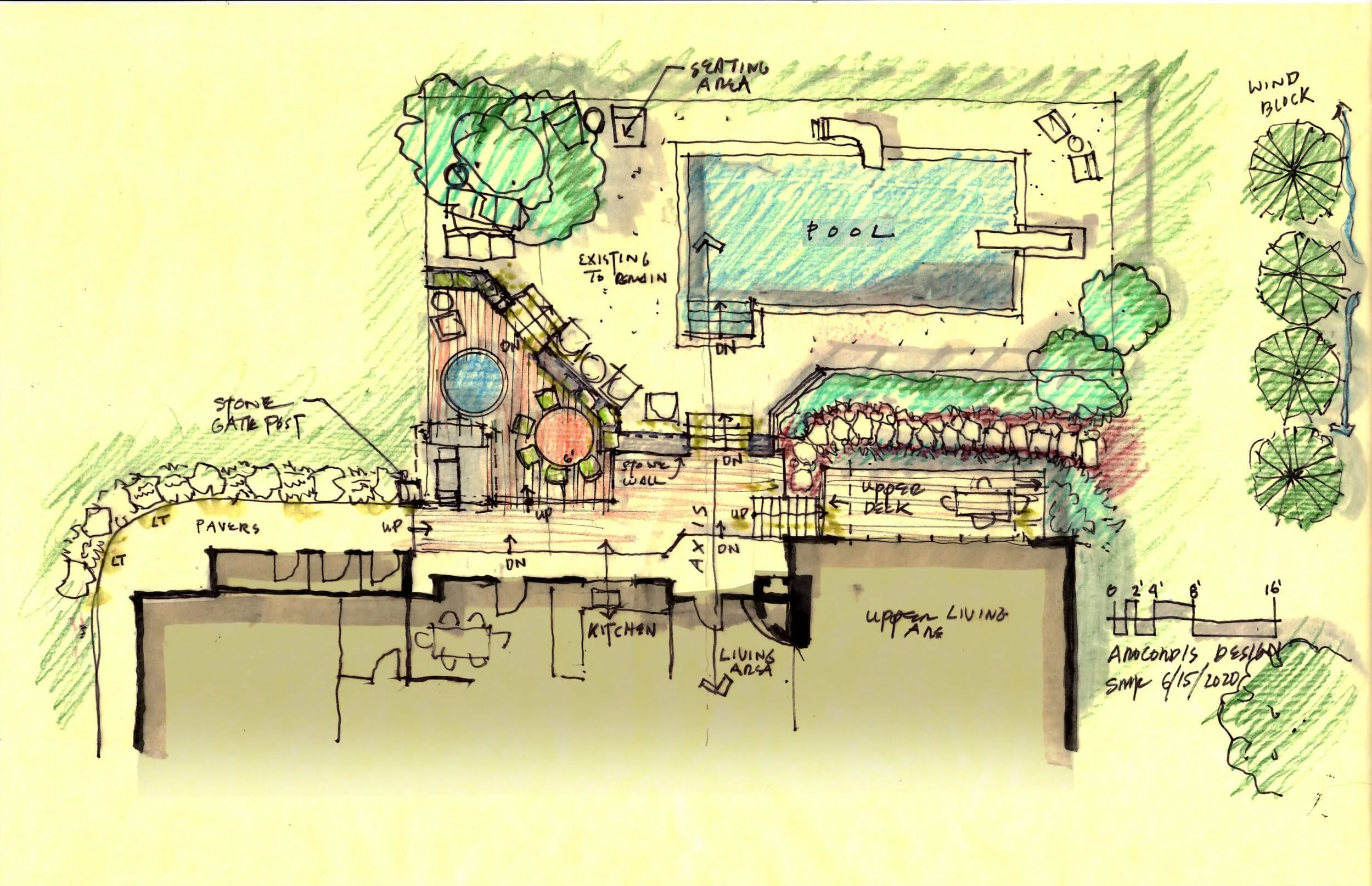
We worked on some landscape design concepts recently to update the outdoor experience behind a home in Central Vermont. Built in 1970, the contemporary-styled four-bedroom Acorn Deck House still had its original decks and pool enclosure, dated lighting fixtures, and awkward circulation.

async src="https://www.googletagmanager.com/gtag/js?id=UA-26065156-1">

Modern Net-Zero Farmhaus: Sustainable Living Design

Sustainable Design & Living: Where to Start?

      Interested in sustainable living at home? Wondering how to integrate beauty, function, and concern for energy efficiency, low or next to no energy use while creating a more predictable affordable future? Wanting to downsize from your now oversized family home to something simpler, perhaps smaller in size and maybe not so complicated?  Or starting to transition at work and thinking about starting a home-based business or working from home more and more often but wanting a separation from your living spaces? 

      We too have considered these questions over the last few years and have developed and now designed a small net-zero capable modern farmhaus addressing these many questions. The home design is also inspired by the iconic Big-house, Little-house, back house, and barn. We began its design last winter but developed further into a designed home concept we present here.  And it's a relative to the Net-Zero Mountain Retreat we wrote about earlier here. 

Birdseye view of proposed building and site

Birdseye view of proposed building and site

View of main entry and overall form of the 1-1/2 story home design

View of main entry and overall form of the 1-1/2 story home design

View from south looking towards the home and live-work garage.

View from south looking towards the home and live-work garage.

Bringing the Outdoors In: The Site Plan

       In our residential work we believe in bringing the outdoors in and extending the indoors out with an ample west facing terrace, garden beds with extensive room for planting around the home and its grounds. We site the home into a fairly flat setting with room for Photovoltaic solar trackers to offset home and the garage live/ work space energy use hopefully to a net-zero energy usage level.  A vegetable and wildflower garden rests to the west of the garage and below the solar tracker orchard.  Rainwater collection barrels lay near garden beds around the house to help reduce use of well-water or city or town water usage. For now the home is oriented long way north to south. Final siting would need to be adjusted to your site, solar orientation, its topography and views.

First Floor Plan

First Floor Plan

Second Floor Plan

Second Floor Plan

The Floor Plan: Layout and Space-planning

      The lower level has 1,240 square feet of living, dining, kitchen, and the master bedroom suite.  Walk upstairs to find an open studio overlooking the lower level with two bathrooms and a full bath. The upper living level is 749 square feet.  The separate live-work garage has over 450 square feet of space on each level. 

Open Living: Interconnectednes

      The floor plans show interconnections and intentional open views across the spaces from Kitchen to the living and dining spaces and from the living/dining areas up to the studio loft above and kitchen below.  Skylights overhead bring daylight into living/dining area and studio space with the stair.  Central storage and work area with washer/dryer and electrical and mechanical plant lay near the stair and across from the Kitchen. 

View from kitchen towards living and dining area

What's Next: Refining the Design and Getting into the Details

     Once adapted to your specific needs regarding location, site and topography, views as well as internal space planning and program we would refine the design, getting more specific about what makes this a net-zero capable home and site design.  For starters in our mind those systems might include the following:

  • The building envelope considers fairly high performing insulation levels such as (R40) 12" double stud dense packed cellulose wall framing with 2" rigid out-sulation, (R60) 18" dense packed vented cathedral ceilings with TJI's, (R20) 4" min of underslab insulation and (R10) 2" foundation wall insulation.

  • Possibly a small size air source heat pumps for heating, Panasonic whisp  to assist with air-sealing below on the wall and below the vented standing seam roofing.

  • Low-e clear triple insulated glazing and doors with appropriate solar window coverings to mitigate heat gain on the interior.  There may be more specific tuning of the windows and doors depending on the face orientation of the home.

  • There would be an optional very small high efficiency wood or pellet stove, more for the "spiritual" fire with through wall venting to assist with fresh air intake.  Or windows could be opened when the fire is lit for additional ventilation.  

  • Simple durable interior finishes, hopefully locally sourced wood trim, low or now Volatile Organic Compound paint or stain finishes. Deciding on finishes appropriate for you lifestyle, lifestage, family usage are a longer conversation worth paying close attention to ease of long term care, warranties and eventual replacement and recycling or upcycling where possible.

  • All of the detailing would be designed and built to low-energy home performance levels helping to potentially achieve net zero-energy usage on a yearly basis.  Another step would be running energy modeling, right-sizing the internal heating and ventilation system, optimizing the window sizes and glazing specifications.  

Depending on the homeowner and family initiative and available time, an extensive vegetable garden nourished by composting might further enrich sustainable living.  If gardening takes too much time, join a local Community Supported Agriculture farm to get your vegetables year round.

Third Party Green Building Programs: An Overview

      Of course achieving those goals depends on the client, their budget and schedule, whether or not to purse local or national high performance building certification and at what level of performance.  This might mean for example here in Vermont, enrolling in the Vermont Energy Star Home program or the High Performance Homes program run by Efficiency Vermont.  Depending on where you're located in the U.S. you may want to consult the National Energy Star website to learn more.

Enrolling and completing such programs benefits the homeowner in a number of ways. Firstly during the construction phase and operation of the home, and then on the back end, providing green certification of the quality of the home for future reselling. This backend grows increasingly relevant as more and more State wide Multiple Listing Services add Green Building related components to available listing criteria for homebuyers.  Called the Green MLS toolkit nationally this initiative has taken hold in Colorado, the Atlanta area, Chicago, Portland, Oregon and increasingly elsewhere.

Qualifying projects for Efficiency Vermont's Residential programs receive energy consultation and performance testing services helping ensure your high performing project complies with their program leading to receiving helpful financial incentives and certification of performance levels reached.  Similarly NYSERDA in New York State,  Mass Save in Massachusetts,  NHSAVES in New Hampshire, EfficiencyMaine  all provide Energy Star and in some cases High Performing home programs like Vermont.

Ask your architect and builder if they have experience with these programs or similar ones near you.  If not, you may want to look elsewhere if you seek a energy efficient high performing home, whether new construction, renovation or an addition.  Green building is mainstream now having matured over the last 20 years and in a sense is the new normal.  

Other more stringent third party verification programs exist such as Passive House, Living Building ChallengeUSGBC LEED for Homes to name a few. These involve  adherence to even more stringent high performing efficiency and whole building and site design standards. They examine more closely sustainable siting, materials, low water and zero energy use, or even positive energy generation,  holistic thinking, life cycle cost analysis and more.  

We Welcome your Comments and Insight

In the meanwhile, we hope you've enjoyed this story about the design process. the overall design and some of the details of this Modern Farmhaus.  Let us know if you have any questions and comments about the design.  Happy to answer them.

If you enjoyed the links to green building programs, materials and other information and find them helpful do let us know below in the comments section.  We are always looking for helpful information. Don't hesitate to share in the comment section below.  

Follow us to stay in touch with what we share and write, or contact us if you would like us to speak at your conference or participate in a panel or better yet want to work together on a fine green home for you and your family. 

Learn more

Back to our project portfolio

To see more examples of recent home design project work, go check out our project portfolio by clicking on the button below. There you will find a mix of recently completed built residential work, new builds, renovations, or home design projects now in progress. Whether in Montpelier, Hartland, Burke Hollow, Calais or East Ryegate, Grand Isle and beyond, here in this section of our site, you can also find examples of our growing collection of customizable net-zero ready prototype and spec houses. Our portfolio awaits your visit. Welcome home!

Go to our Project Portfolio


async src="https://www.googletagmanager.com/gtag/js?id=UA-26065156-1">

Build Thoughts: Pre-fab, Modular or Custom-built for your Home?

Which Way to Build Your Home

      Thinking about having a home designed this winter and built next summer? Did you know you have some options to deliver it and get it done? There are three major ways to do it. Custom-built, Pre-fab and modular. Depending on your level of need for design and development of your design, your budget and schedule for building all are valid ways to deliver your new home or addition.  We have learned over the years there is no right way to build. It is an important conversation to have fairly early in your process though.

Prefabricated homes

      Pre-fabricated homes fall under two categories, modular and panel built. Both methods utilize factory-built processes of construction under controlled conditions with end products shipped to the site.  They differ a bit in how turn-key the total system is and how much site assembly time and buttoning up is required. Both offer a high degree of control over the quality of construction, durability, and attention to energy efficiency details such as air-sealing and insulating the building enclosure.

Modular homes

    Modular homes are built in individual boxes manufactured in a factory under controlled conditions and brought onto the site prepared in advance with roughed in site work, foundations and or concrete floor slabs. The boxes are positioned into place, connected and then finished inside and out with final trim, interior finishes, roofing and specialized interior features. Often there a wide variety of home plans and designs available but if a homeowner desires more personal attention and developing a more customized design working with an architect is essential, especially one familiar with the modular home design and construction process. If large vaulted ceilings are desirable in the design, the modular box fabrication in the factor must be adapted and sometimes there are limitations which sometimes makes penalized construction more desirable. There usually is a 12 day to 14 day production cycle for each home, so if unusual custom features are desired they usually happen on site if they don't fit into the regular cycle. 

Panelized Homes     

Panelized homes are also built in factories, but instead of boxes comprising of walls, floors and roofs like in modular homes, individual panel sections are built to exacting specifications of these elements off-site and delivered onsite for assembly and finishing by builders familiar with these techniques.  The factory produced components are just in smaller sizes and more numerous than what is shipped on site with the boxes from Modular home manufacturers.In this article further clarifying the differences "panelized homes can be useful in building houses that don’t work neatly as modules and it can be just as structurally sound as other types of prefabricated building. Commercial prefabricated building is often done this way as it allows for wide open spaces and high ceilings. It is also much less expensive to transport a building in panels than in modules if it is large enough."

Custom Stick-built Homes

      Custom-build homes unlike the prefabricated variety get built entirely onsite usually overseen by a home builder or contractor or in some cases, the homeowners them selves, The highest degree of customization is possible with this delivery method and opportunity for homeowner interaction throughout the building process.  Since all portions will be built on site, the length of time is longer and more prone to being impacted by weather and seasons of the year.  Where in the prefab route there's a lot of interaction in the beginning with architects, designers and factory personnel, and less so on site, there's a greater opportunity for interaction and collaboration between the homeowner, builder and architect with the custom-built approach.

Figuring out the best home construction delivery option?

    Depending on the ability for owner pre-visualization in conjunction with architects and designers design stage use of advance 3D-design software such as AutoDesk Revit, SketchUp custom site built may have advantages. If there is less pre-visualization available the custom-built approach allows homeowners to experience and see their home emerge out of the ground. They see the various stages of work including site work, concrete work, framing assembled for roofs, walls and floors providing more and continuous interaction opportunities with builders to make changes along the way. While adjusting the design in this way may prove expensive and set back schedules, the customization helps ensure client satisfaction when it's the desired route to go.

      Other factors such as cost, size, location and convenience features may impact your delivery approach. We like to ask you to consider thinking smaller is beautiful, less impacting the environment, easier to live-in, operate and manage over the long term. If seeking a home site, think empty lot in or close to town, not far out of town if possible to reduce your transportation costs and carbon footprint as well as boosting your convenience.  Surprisingly privacy and remoteness can be designed into the details of your home layout and construction.  Another factor to think about is planning for multi-generational living, ease of accessibility along with your home design process.

      However, regardless of your delivery path its important to incorporate comfort and money saving energy efficiency features into your project building envelope, building systems and site design. While we have low energy prices today we all know tomorrow maybe another story. You can mange the volatility of long term energy costs by designing in operational predictability today by creating a high performing low energy using home fitting your budge and sustainability goals. That way you can focus on living well, not living poorly with doubt about future affordability.  Peace of mind is important.

     Contact us to learn more.  We know of a variety of pre-fab, modular and custom-builders in Vermont and beyond we can recommend. 

Learn more

Want to learn more about professional architectural services? All you need to do is click on the below Learn More button. Fill out our simple form and we will respond within 24-hours. We hope to hear from you!

Learn more

Back to our project portfolio

To see more examples of recent home design project work, go check out our project portfolio by clicking on the button below. There you will find a mix of recently completed built residential work, new builds, renovations, or home design projects now in progress. See our projects in Calais, Montpelier, Burke, East Montpelier, Hartland, Grand Isle and more. Here in this section of our site, you can also find examples of our growing collection of customizable net-zero ready prototype and spec houses. Our portfolio awaits your visit. Welcome home!

Go to Our Project Portfolio
async src="https://www.googletagmanager.com/gtag/js?id=UA-26065156-1">

An appreciation of Carlo Scarpa, Italian architect

async src="https://www.googletagmanager.com/gtag/js?id=UA-26065156-1">

Design sketches - Lines in Motion

Recently I sketched these to enjoy drawing in a small Moleskin notebook I have in my Lamy medium nib fountain pen. I’m curious about white space, pattern, geometry and conveying flow. Some of the below appear more random others seem more evocative of natural forms. I stared outside looking at trees and their abstract patterns for some. Others I thought about more galactic themes with stars and planets. I rewatched the Apollo 11 documentary recently. Maybe that influenced these pen and ink sketches as well. I also have visited a time showroom and enjoyed looking at mosaic tile art panels.

What are your impressions of these? What do you think of when looking at them closely? Please share your thoughts. I’m curious what you think.

Lines in motion - I

Lines in motion - I

Lines in motion - II

Lines in motion - III

Lines in motion - IV

Lines in motion - V

Lines in motion - VI

Lines in motion - VI

async src="https://www.googletagmanager.com/gtag/js?id=UA-26065156-1">

Recent Project: A New England Carriage House on Lake Champlain

Recent Project: A New England Carriage House on Lake Champlain

A Sort of Homecoming presented it self this summer….read on for more.

async src="https://www.googletagmanager.com/gtag/js?id=UA-26065156-1">

Visualizing a Garage and Porch Addition Home Design

The Starting Point

Earlier this spring a local builder, Montpelier Construction and family they were working for, came to us for visualization help to better understand their project. They needed to see how the massing shapes and location of adding a porch and an attached garage fit with their 1980’s Romberg frame green home.

We helped them by taking their plans and quickly modeling them in our AutoDesk Revit LT design and production software.

View from drive looking towards the house and proposed garage

View from drive looking towards the house and proposed garage

View looking across driveway to main entry and new proposed porch with a mud room.

View looking across driveway to main entry and new proposed porch with a mud room.

The project should be completed later this year. We can’t wait to see it finished and the family using it. It is really exciting to help contractors and their clients visualize the possible end results of their design vision. By doing so, we supply an invaluable service helping the previsualize their design ideas before it is built.

Back to our project portfolio

To see more examples of recent home design project work, go check out our project portfolio by clicking on the button below. There you will find a mix of recently completed built residential work, new builds, renovations, or home design projects now in progress. Here in this section of our site, you can also find examples of our growing collection of customizable net-zero ready prototype and spec houses. Our portfolio awaits your visit. Welcome home!

back to our project portfolio
async src="https://www.googletagmanager.com/gtag/js?id=UA-26065156-1">

Exhibit of recent paintings

Exhibit of recent paintings

Recently, Stephen M. Frey, AIA - LEED AP, had paintings in watercolor and acrylic in a group exhibit at The Center For Arts and Learning in Montpelier, Vermont.

async src="https://www.googletagmanager.com/gtag/js?id=UA-26065156-1">

Get busy out there today, do good things

Get busy out there today, do good things

Get busy out there today and don’t look back!

async src="https://www.googletagmanager.com/gtag/js?id=UA-26065156-1">