
Redefining a backyard - updating a classic for outdoor living
Quick Guide: Modernizing a 1970s Acorn Deck House Exterior Landscape Design
Project Overview: A master planning case study for a classic 1970s Acorn Deck House in Central Vermont. The goal was to refresh the existing landscape design and resolve awkward circulation, update dated pool enclosures, and clear obstructed views caused by previous piecemeal exterior additions.
Key Renovation Strategies:
3D Master Planning: We utilized Revit 3D modeling and Google Earth imagery, along with hand design sketches to visualize how new deck and landscape design configurations would interact with the existing topography and the distinctive Deck House rooflines.
Restoring Views: Original railings and poor hot tub placement blocked sightlines from the kitchen. The solution involved lowering obstructions and proposing modern cable railings to create a seamless visual connection to the Green Mountains.
Improved Flow: We realigned the main stair axis to connect the lower living room directly to the pool deck, using low stone walls to define entertaining zones without blocking light.
Safety & Ambiance: The design replaced harsh floodlights with integrated LED step lighting and warm-temperature string lights, enhancing safety for evening use while maintaining a soft, rural ambiance.

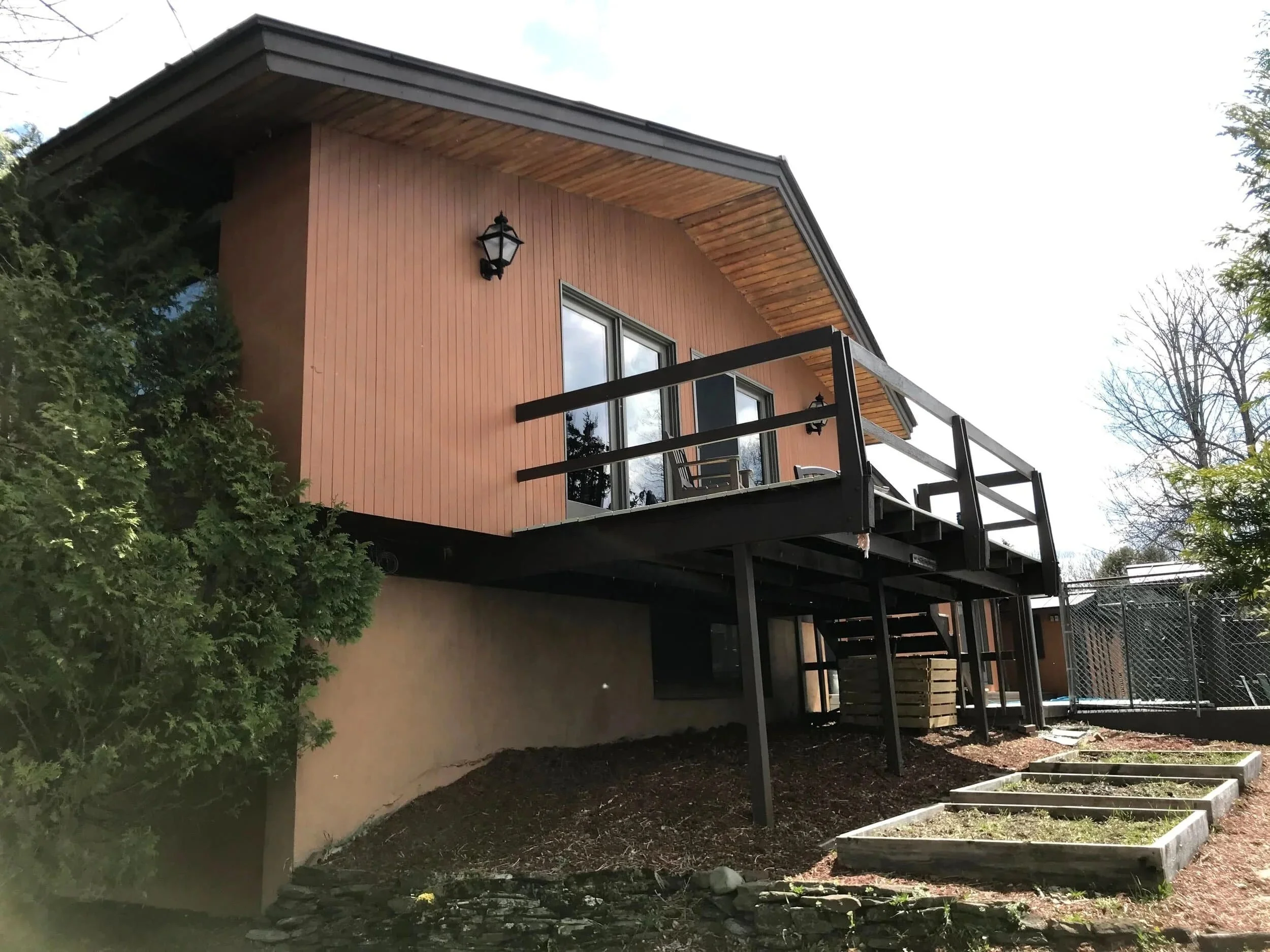
Rear view of the 1970’s Acorn Deck House
We worked on some concepts recently to update the outdoor experience behind a home in Central Vermont. Built in 1970, the contemporary-styled four-bedroom Acorn Deck House still had its original decks and pool enclosure, dated lighting fixtures, and awkward circulation.
How do you assess a 1970s Acorn Deck House for renovation?
To support our overall master planning work in other areas of the home we completed a fairly detailed existing condition 3D-building and site model. We developed this through a combination of a site-visit where we measured and confirmed various conditions, overall-size of the home. In conversation with the owners, we also mentioned how their home appeared to be an early 1970’s kit house, and might it be possible to find out more and see if any information existed. Luckily the home was in fact built from plans from the Acorn Deck House Company based in Acton Massachusetts which the owner obtained for a small charge.
This information plus our existing building measurements and Google Earth Imagery of the overall property provided enough information to create a concept level design building and site model from which produced scaled 2D underlay drawings we could make the Option sketches below with. Part of our existing condition services also includes taking extensive photographs to use to reference during design.
Can architectural design be done effectively via virtual meetings?
The owner first contacted us in late February 2020 in the emerging days of the Pandemic. Since that time we visited the site only once. When we did we wore a cloth face mask and kept socially distant while inside their home and out. Since then we have met virtually on Google Meet numerous times for half-hour to hour-long design sessions.
During these sessions, I routinely shared my screen presenting ideas to the clients with our 3-D Revit Building and Site Model, hand sketches and visited our Arocordis Design Houzz idea site. Sometimes it wasn’t so seamless, but other times it was. Note we have been working like this since 2017. With these methods, we have consulted from Hawaii to Switzerland and locally 15 minutes away sadly due to the Coronavirus.
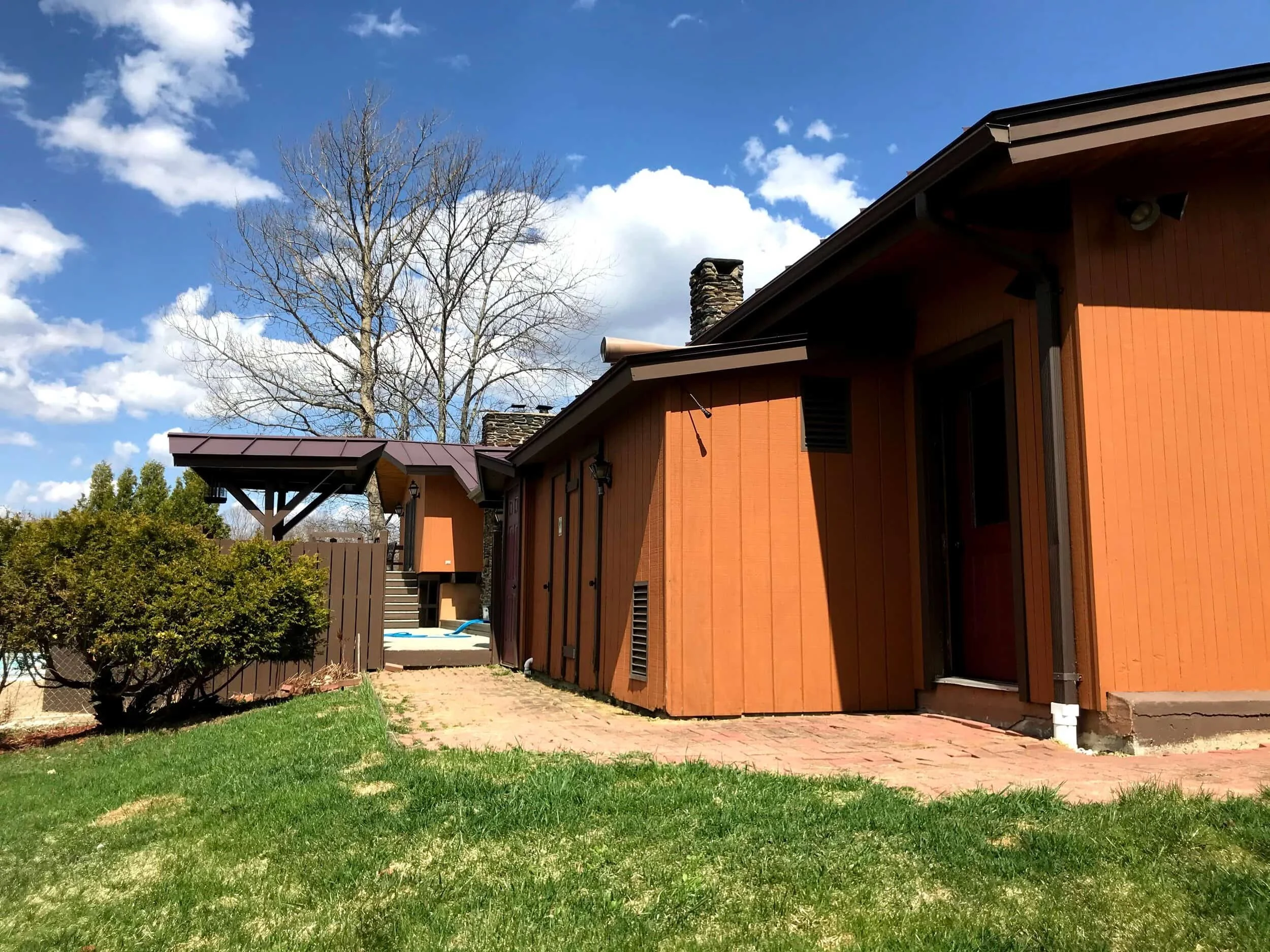
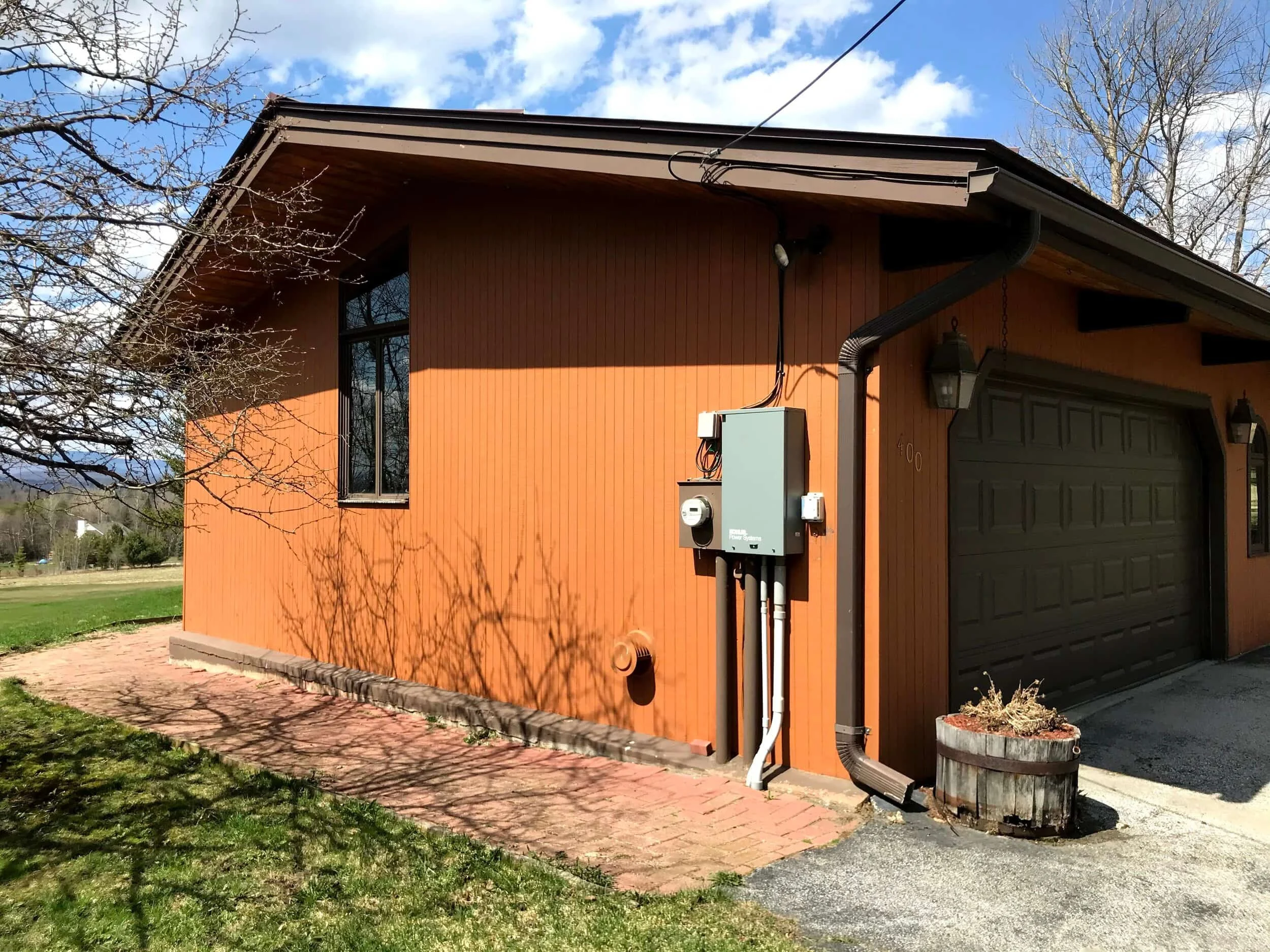
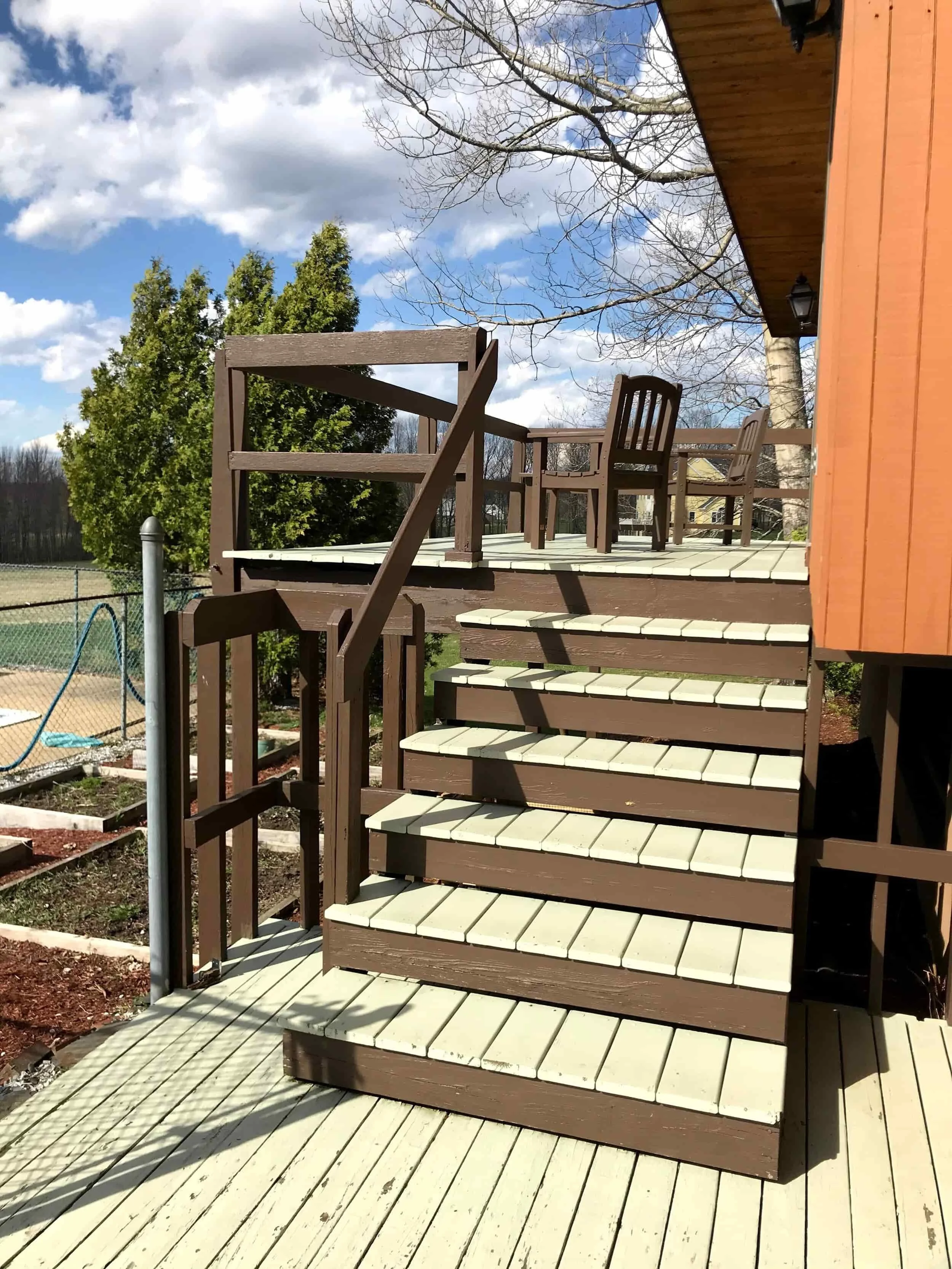
A carousel of existing photos
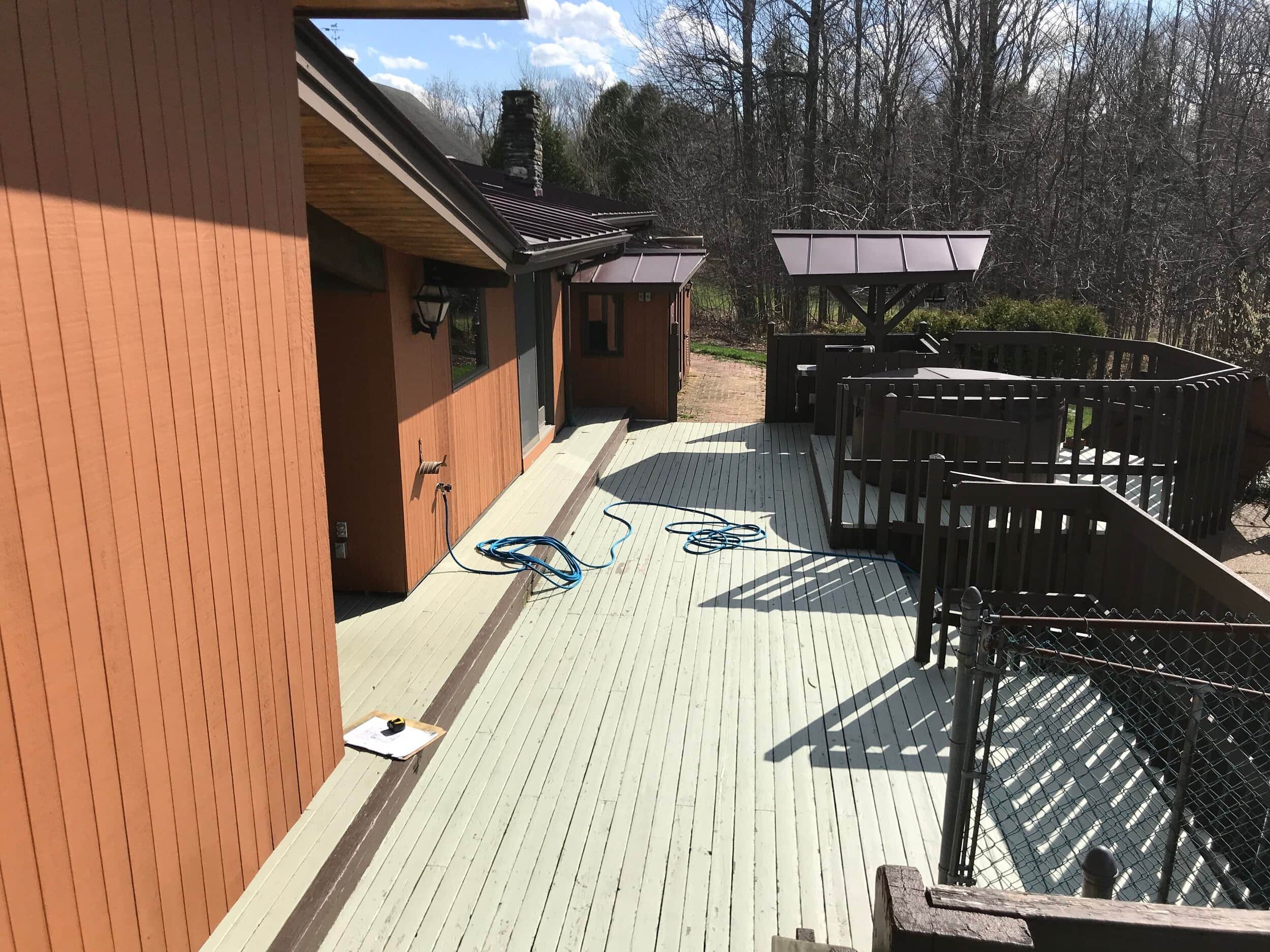
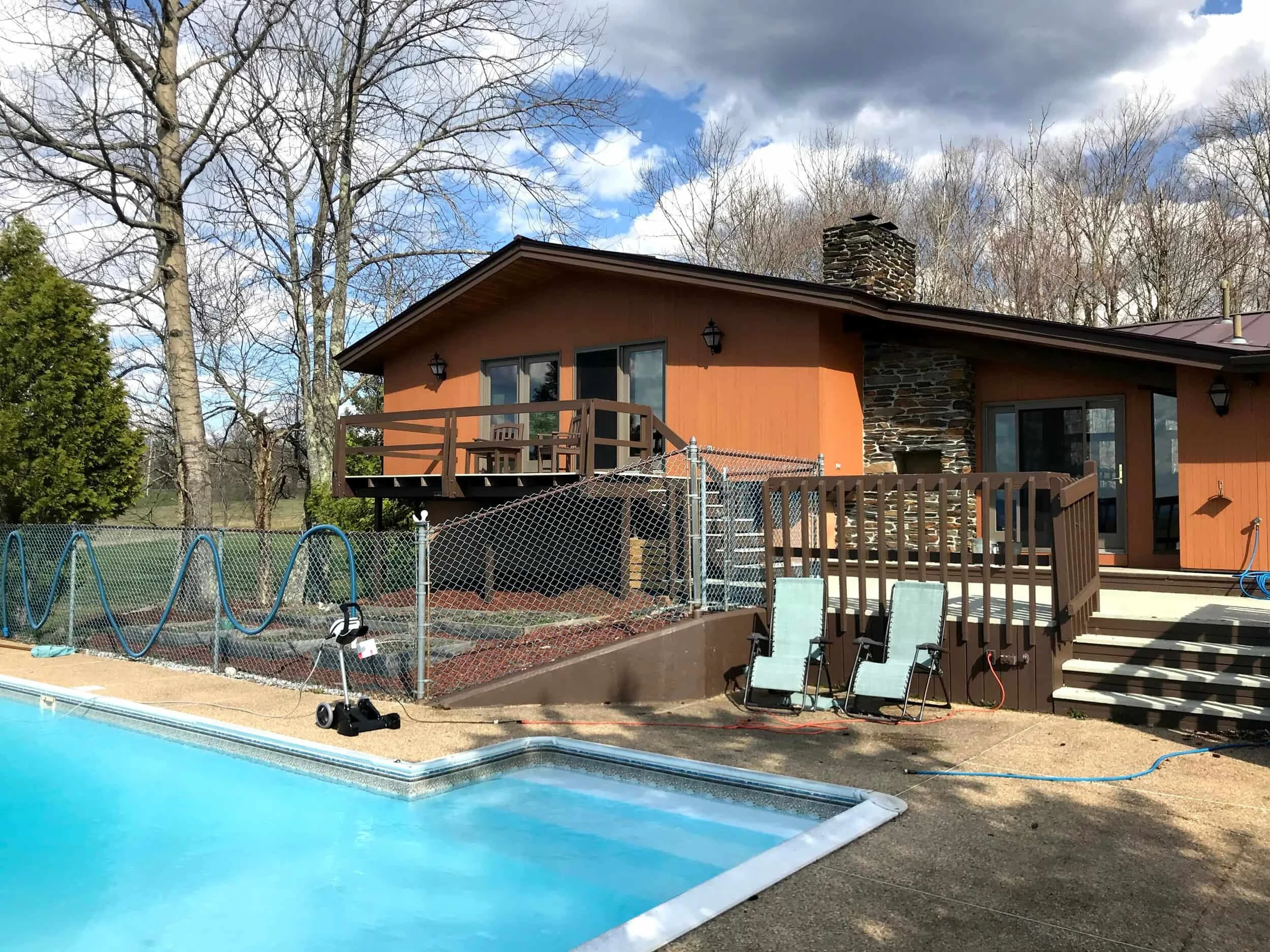
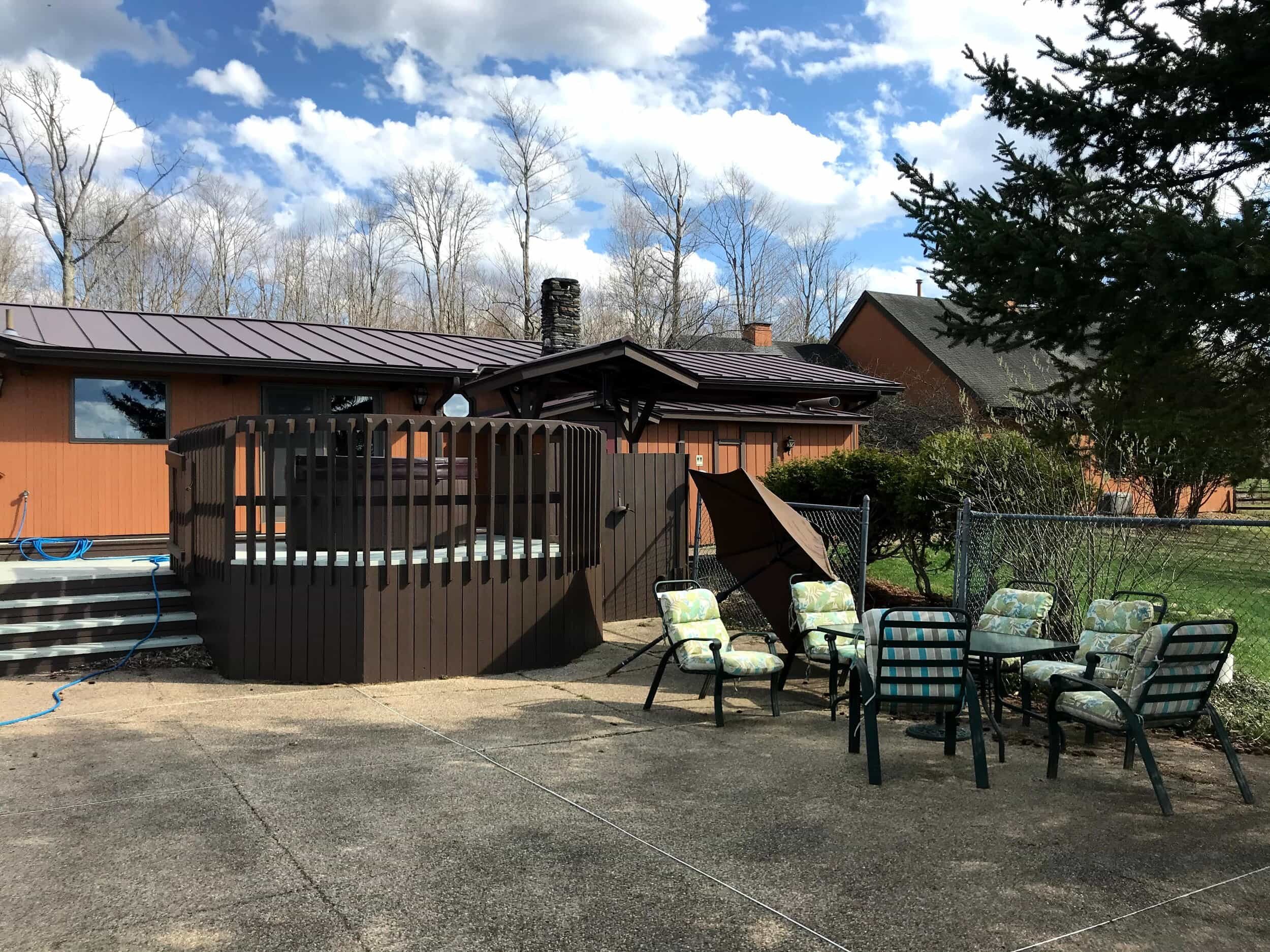
What are the common layout problems in Deck House backyards?
The owners sought to update the rear of their home to be more in keeping with today’s entertaining needs and be more family-friendly. Also, some rear deck additions over the years obscured views from inside the house, especially from the kitchen sink window. The decks immediately near the home were very narrow and didn’t seem to fit the outside space well between the house and the ampler-sized decks next to them. The progression seemed off as well. The deck railings were simple painted wood vertical guards in most areas except the upper deck by the upper living area. They do not meet today’s safety needs for fall protection with their out of date mid-century design.
Design Options: How do you restore flow and views in a mid-century home?
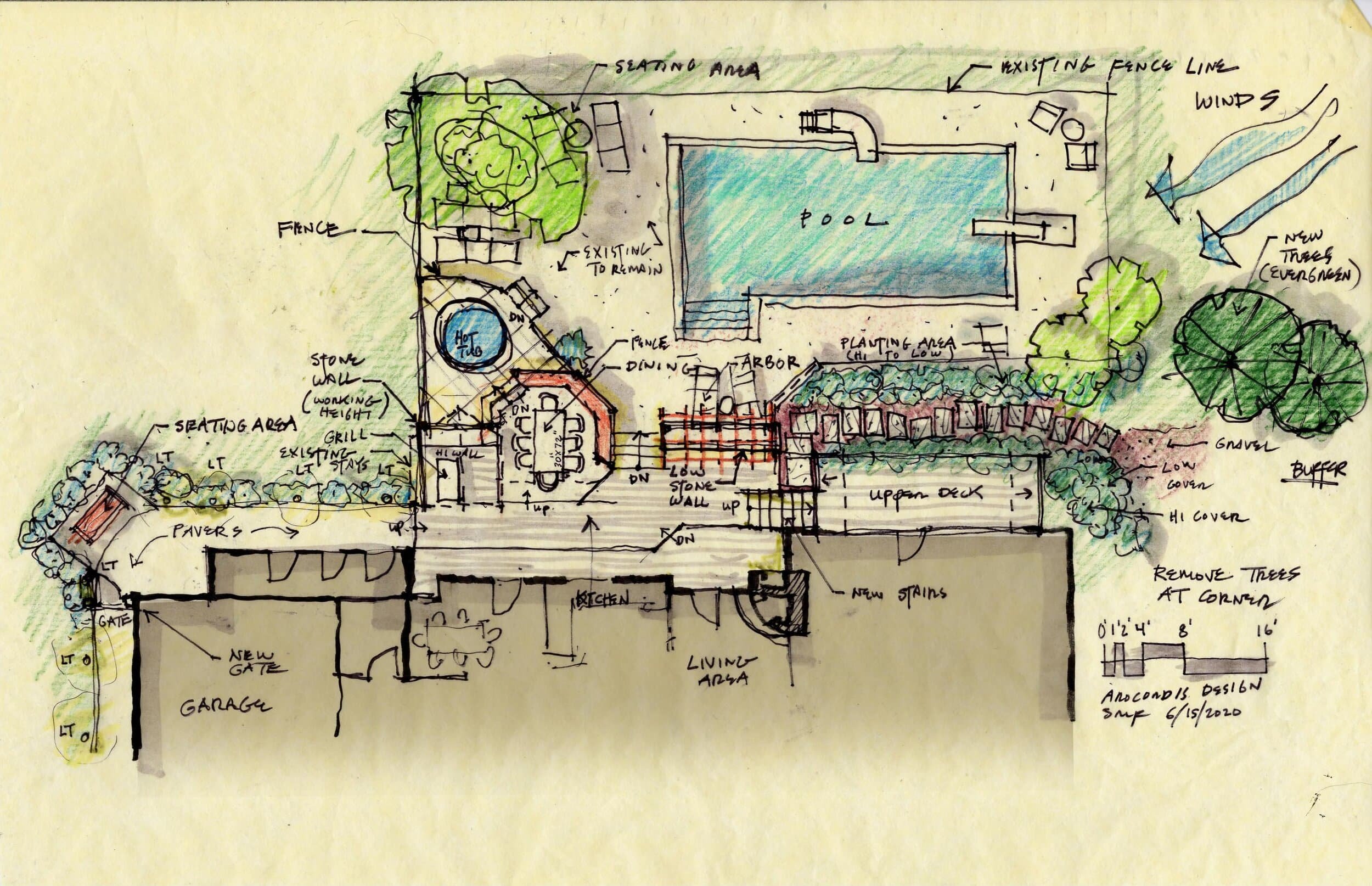
Option A - Partial Site Plan Sketch
Option B - Partial Site Plan Sketch
How about a clearer progression? Option A
With this option, we sought to create a clearer progression from the front of the house around the side by creating a small seating area at the corner of the walkway. From there we proposed adjusting the location of the existing hot tub away from blocking the view from the dining room window closer to the pool. This left behind a clearer space for an eating area. From this area, guests and family members could step down to the hot tub below now proposed semi-sunken in the pool deck area.
At the stairs leading from the house to the pool, we propose building a low stone wall with a free-standing arbor which could serve to frame the view of the mountain range beyond. It also provides a perch from which to observe the action below on the pool deck area. Moving around the rear further we show a naturalistic path with stone stepping stones bordered by a planting area separating the pool fence. We would propose new updates to the pool fencing and deck railings with custom and or semi-custom black-painted metal work with thin modern lines and possibly cable railings.
What if you simplify the pathway around the house? Option B
Here we simplify the pathway leading around the house merely proposing a planting area at the corner. As you proceed into the deck area, on the left you will see a more unified larger area combining the dining and hot-tub zones into one larger shape. Doing so provides a natural flow from high to low ending on the pool deck.
We slid the main stair down to the pool to line up with the internal axis of the lower living room to create a clearer progression from inside to out as well as framing the view to the mountains beyond. We propose introducing the same low stone wall with an ample top for seating to create a high-low separation from the pool area. The wall serves as a simple bench area for easy entertaining and acts as a natural activity hinge between the two areas. We do away with the wooden arbor here.
What is the best lighting strategy for rural Vermont decks?
The low stone walls and other areas provide natural spots for tasteful LED step-light-type fixtures to create a delightful night ambiance while helping make it safer to move around the deck and pool areas in the evening. Doing so avoids harsh overly bright area lighting with spot or floodlights. Also, the tasteful integration of LED string lights on arbors and railings with warmer color temperatures would further amplify ambiance and safety. Want to learn more or have questions?
Ready to update your Vermont home?
Contact us below by clicking on the learn more button. We will happily answer any questions you have or provide you with more information. It takes you to our Contact Us page on our website. Let’s connect!
Want to learn more about our other projects?
To see other examples of recent home design project work click on the button below. There you will find a mix of recently completed residential work, new builds, renovations, or home design projects now in progress. Here in this section of our site, you can also find examples of our growing collection of customizable net-zero-ready prototype and spec houses. We hope you enjoy our work.