
11 Strategies for Climate Positive Residential Architecture and Planning in Vermont and our Region
Sustainable climate-positive residential architecture and planning minimize the negative environmental impact of buildings and structures. It also reduces greenhouse gas emissions and can contribute to the reversal of climate change in Vermont and our region. To achieve these results, we advocate and use these key sites and building design strategies in our work. They include:
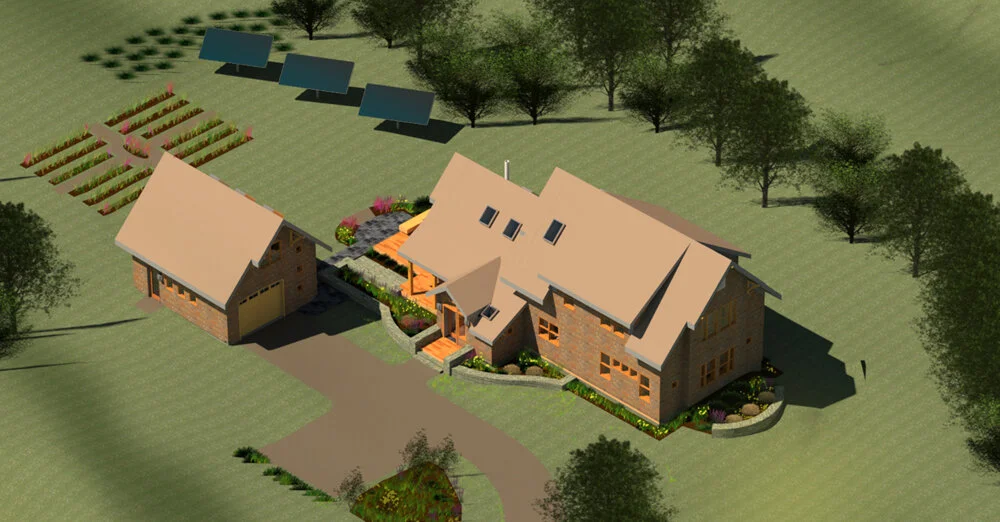
Birdseye view of an Arocordis prototype 3-bedroom NetZero home design with a garage apartment or live-work office.
Energy efficiency: Energy efficiency is an important principle of sustainable architecture and design in Northern New England, as the region experiences cold winters and hot summers. Using high-performing windows, doors, and insulation improves efficiency, especially at levels above the energy code minimum. Energy-efficient systems and appliances, such as high-efficiency heating and cooling systems, can help reduce energy consumption and greenhouse gas emissions. Energy-efficient homes are also more comfortable to live in. Well-designed, compact, and efficient floor plans also can help improve energy efficiency.
Passive design: Passive design principles, such as the use of large windows and strategic placement of a building to take advantage of natural heating and cooling, can be effective in Northern New England.
Renewable energy: Renewable energy sources helping supply power to homes, such as solar panels and wind turbines, can be an effective way to reduce greenhouse gas emissions in Northern New England. Adding onsite residential batteries, energy-efficient heating, and cooling systems, and appliances further increases the benefits of renewable energy.
Green roofs and walls: Green roofs and walls can provide several benefits, including insulation, air purification, connection to nature, and the reduction of stormwater runoff.
Water conservation: Water conservation is an important strategy for integrating into the design. Drought-resistant plants, rainwater harvesting systems, low-flow plumbing fixtures in bathrooms, and low-water use appliances all help lower water usage.
Low-carbon impact materials: The use of materials and finishes with a low-carbon impact, such as rapidly renewable locally sourced, and recycled materials, can help reduce the carbon footprint of home construction. Examples include wood for house framing, flooring, and finish materials from local lumber mills. Flooring and wall tile products can use recycled auto glass or other similar materials to reduce their carbon effects. Strawbale and or sheep’s wool insulation is another choice that also is close to the land, as is reusing stones from walls fallen into disrepair often found on more rural properties. Using fly ash in concrete mixes also is a low-carbon impact choice.
Health and wellness benefits: This type of planning and design also includes the integration of design elements that promote health and wellness for building occupants. This can include the use of non-toxic materials and finishes, proper ventilation, incorporating views, strengthening indoor and outdoor connections, natural light, and daylighting.
Aging in place and multi-generational design: Designing homes that are suitable for aging in place and accommodating multiple generations can build stronger, more sustainable communities and family units. This can include features such as wide doorways, stairlifts, and first-floor bedrooms and bathrooms. Or building flexible living areas with additional bedrooms or accessory dwelling units for visiting family and friends.
Work-from-home options: Including work-from-home options in home design can help reduce greenhouse gas emissions by reducing the need for commuting and supporting homeschooling. It can also bring families together by creating a shared workspace.
Site planning: Sustainable home site planning involves designing buildings and structures that are compact and efficient, oriented properly to views and the sun, and that minimize the impact on the surrounding environment. This can include designing permeable easy-to-drain surfaces to reduce stormwater runoff and using native plants and vegetation in landscaping around the home. Exploring a mix of single-family and multi-family with a variety of densities can positively impact communities in or near city, town or village centers.
Transportation: Design that promotes the use of public transportation and other sustainable modes of transportation helps reduce climate impact. This can include the design of walkable and bike friendly neighborhoods that are accessible by public transportation that also promote community connection.
To learn more
Want to learn more about our approach and design process mentioned above? We want to hear from you. And even better connect with us if you are thinking about or are in the early stages of starting a home design project. Or if you have planning or design questions. We will happily talk with you. For some examples of homes we have designed with these ideas in mind, see Fieldhouse, Wing-house, and Mountain-Meadow NetZero Ready for more. Feel free to click on the button below to contact us.
Or if you want to see examples of recently completed projects or works in design, click on the below button to see our portfolio and project highlights.