
Our Project Portfolio: Built, in design & prototype green homes
Modern addition to a classic contemporary
Multi-generational modern farmhouse | Calais, Vermont
In late 2021, a client hired us to plan and design a modern-inspired bedroom addition wing and major porch and kitchen renovation for the new home they recently bought. He needed a design to improve the multigenerational livability of his new home in Central Vermont.
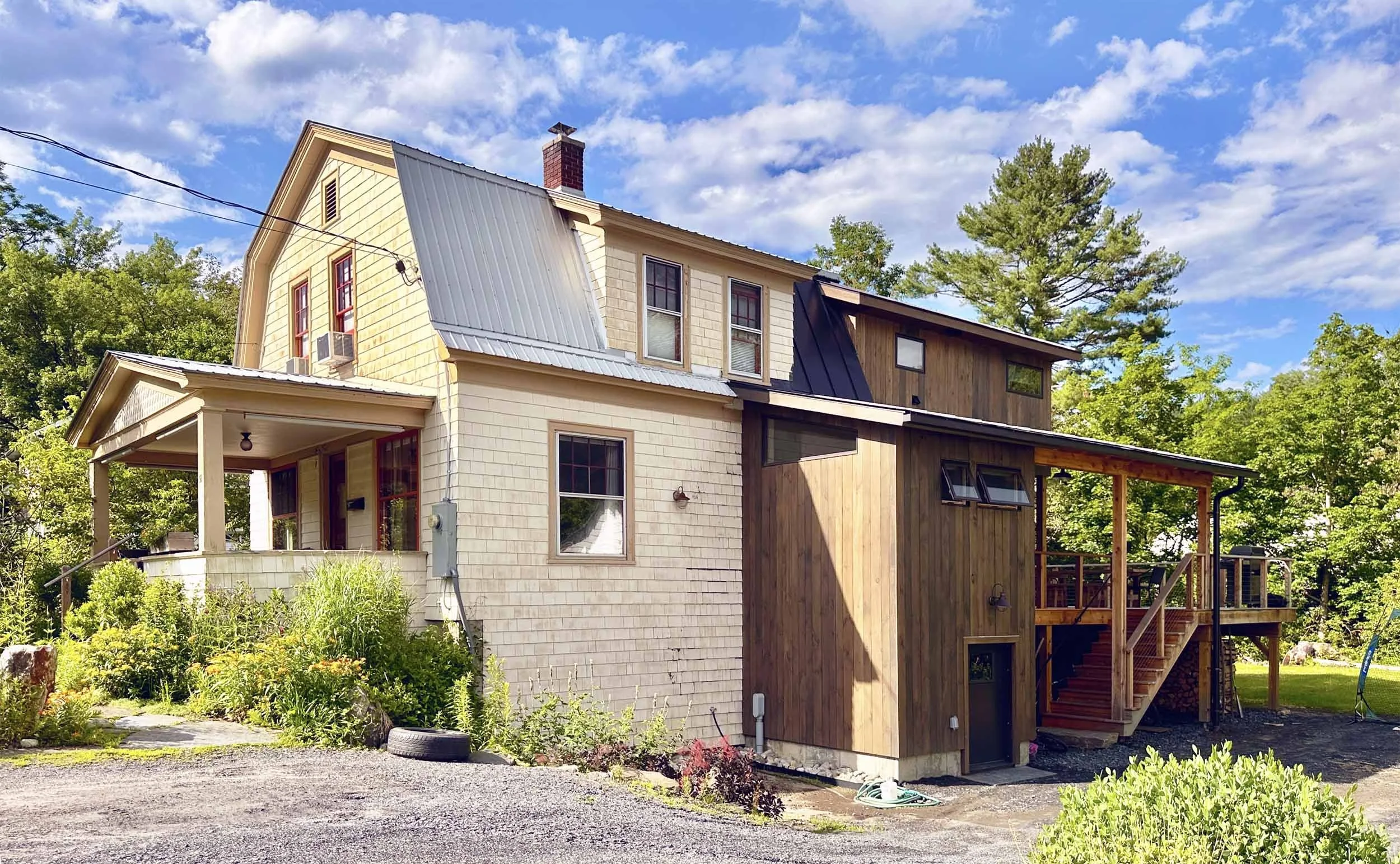
South elevation showing modern additions.
A Montpelier gem reimagined: where history meets modern living
Nestled in the heart of Montpelier, a charming 1940s cottage, and its family was bursting at the seams. This cozy 24'x24' two-bedroom home on Terrace Street had a story to tell, but it needed a new chapter. Enter Arocordis Design, led by Stephen M. Frey architect, ready to breathe fresh life into this classic abode with inspired architectural design and planning.
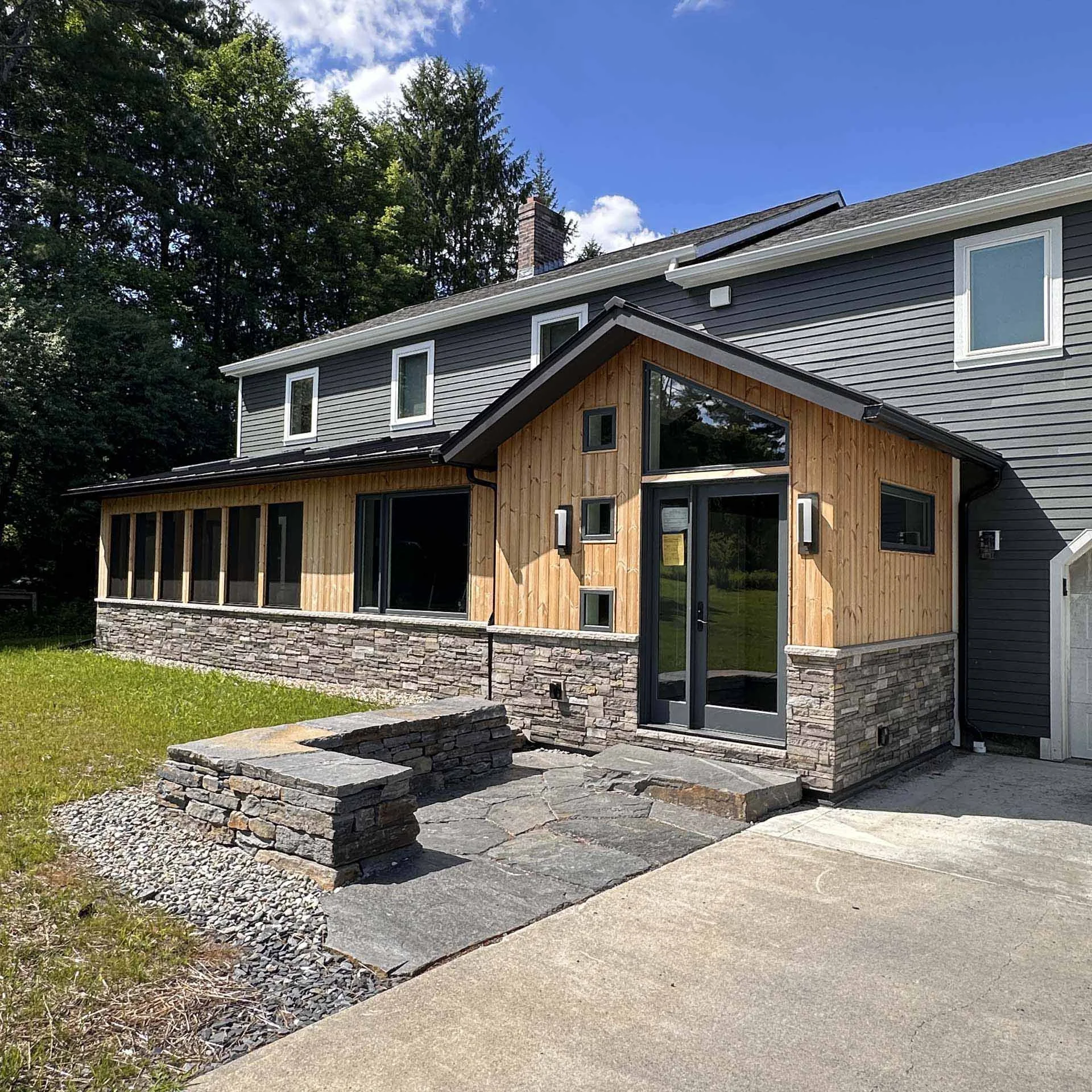
Front entry addition and renovation view
Towne Hill Transformation | A Vermont Case-Study
A Montpelier couple bought a rambling 1980s contemporary in 2017 and rebuilt it into something high-performance and coherent, then deliberately left the last movement unwritten. In 2022, they asked us to write and design it.
New home, southern view - final visualization
Creating a Net-Zero Modern Rustic Farmhouse in Northern Vermont
Arocordis Design likes to create stunning rustic and modern custom homes for clients in Vermont. Here we share this new project in the Burke area in the Northeast Kingdom. We began the design of this rustic modern farmhouse at the start of 2023 and finished recently. The owner-builder started construction in the fall of 2023 with completion in 2026.
The home sits on a hill overlooking a village church spire below….
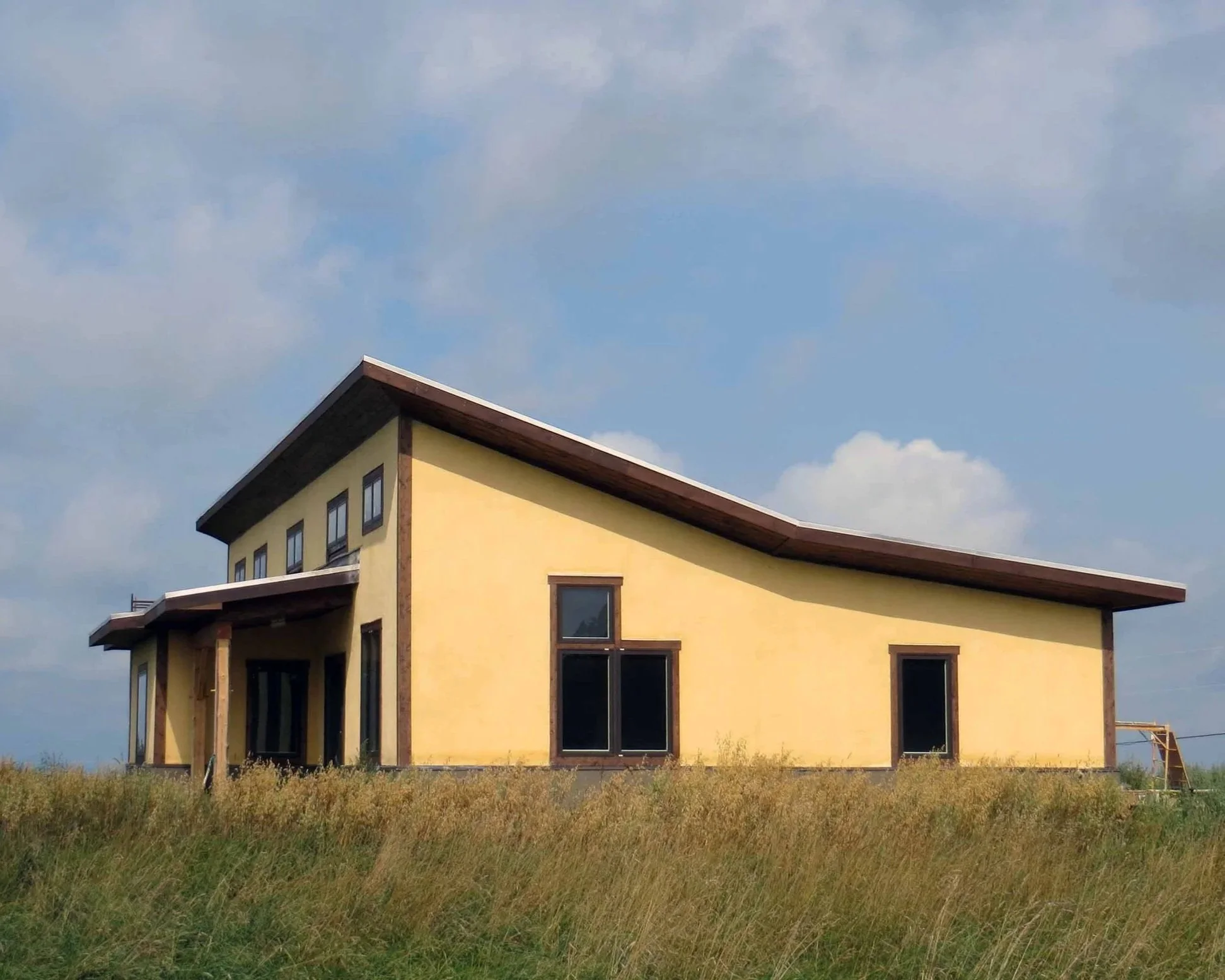
New Strawbale Home - Southeastern View
Strawbale Senior Living Duplex in Holland, Vermont
Vermont’s first high-performance affordable senior housing project was built in 2013 in the Northeast Kingdom area of the Green Mountain state. The house is close the local community and residents’ families, says Becky Masure, now Executive Director of the affordable housing non-profit, Rural Edge, where “seniors retain their independance.”
Evelyn Page donated the land, now deceased, from her familiy’s nearby farm in the memory of her husband: she also gave funds to Rural Edge.

Overall proposed view
From Ashes to Architecture, A New Home Rises | Vermont Case Study
A fire began the story
In the hills of Central Vermont, a historic 1850s farmhouse once stood as a symbol of family heritage. When fire claimed this beloved home early in 2024, it threatened to erase generations of precious memories. Our architectural firm, Arocordis Design, is now helping this family create a new aging-in-place chapter in their story through thoughtful Vermont modern farmhouse design….
Overall northeast view
Fieldhouse | A Net-Zero Vermont Case-Study
A few years ago a couple approached us to adapt our Inside-Out House, a net-zero-ready prototype home design we created a few years ago to their newly purchased land in southern Vermont. We enlarged and customized the prototype design to suit their family needs and design goals. Along the way, we pushed the home design in new innovative directions through our collaboration together.
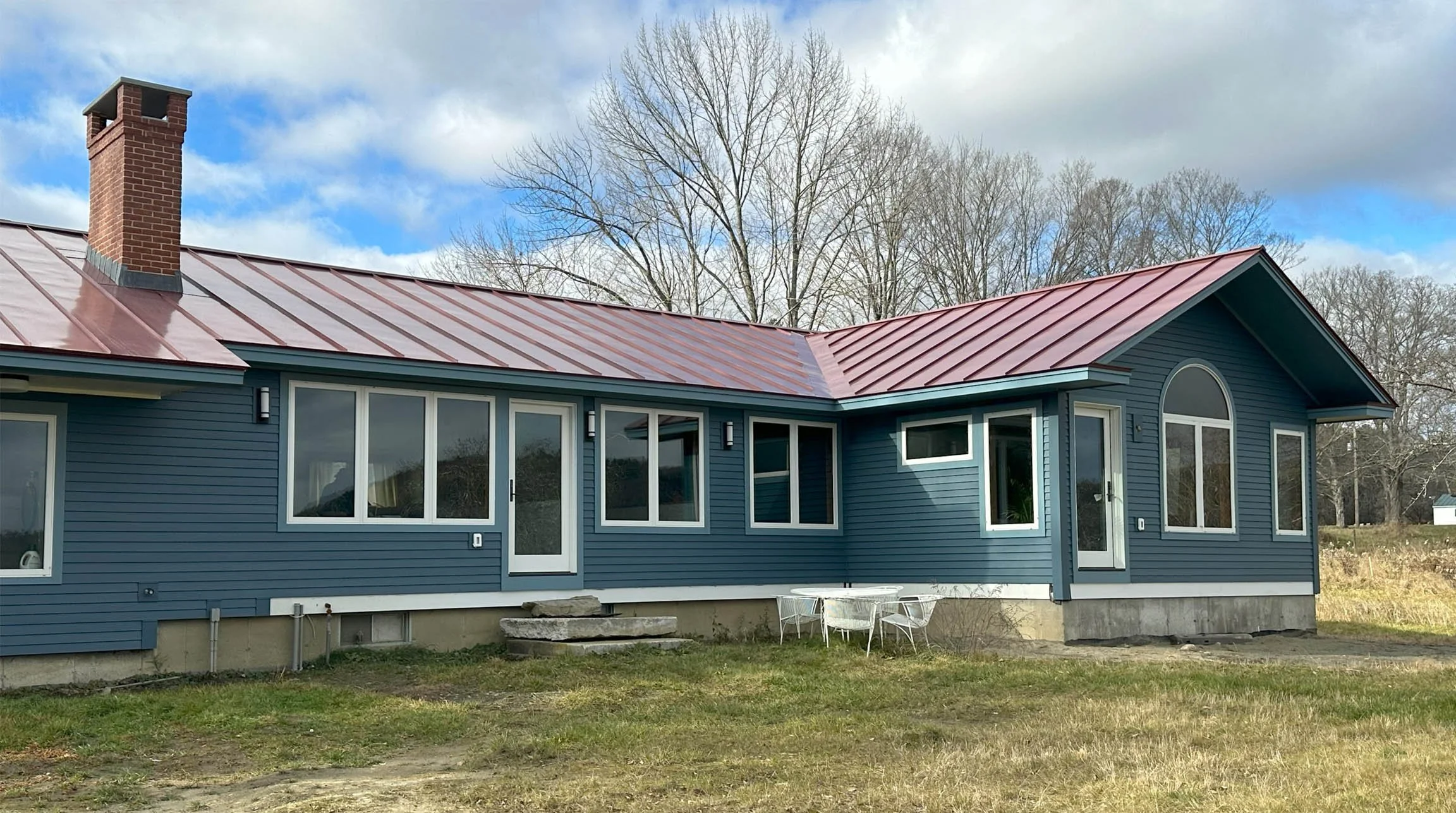
Rear view of renovation and addition
Upper Valley Vermont additions and renovation
Kismet comes in unexpected ways. Sometimes it lies in plain site. A few winters back, a couple hired us to design a modern-spirited set of aging-in-place renovations and additions. The home was a plain 1960’s era single-level ranch with great bones and potential creative design. It lays next to his working beer farm in the hills of Vermont’s Upper Valley in a spectacular…
View of exterior
Zig-Zag House 2 | Vermont Net-zero ready prototype
Periodically we develop prototype green home plans of various kinds. This one we call ZigZag House2. Its name comes from its simple floor plan with zigzagging small volumes at the entry and at a built-in seating alcove area. It's designed to be net-zero ready, aging-in-place friendly, simply conceived, and easy to maintain. A small home with livable spaces suited for a small family, empty…
An evening rendering view of the western side of the home design. Exceptional outdoor living!
Net-Zero Wing house prototype | A Vermont case study
Have land in Vermont and need custom design plans to build from? Arocordis Design developed another easy-to-adapt, dynamic small house 3-bedroom design prototype. It joins others such as Inside-Out Home, Modern Farmhaus, and others. We call it Wing House. It has classic modern lines, uplifting roof forms, and soaring interior spaces.

View of west elevation showing the lake beyond.
A Vermont Carriage House on Lake Champlain
Designed for an international couple returning to Vermont, this 2,400-square-foot Lake Champlain carriage house pairs light-filled living upstairs with a two-car garage below. Sited on four waterfront acres, dual porches capture morning lake views and evening sunsets over the islands. Custom plans and family craftsmanship brought this energy-efficient retreat to life.
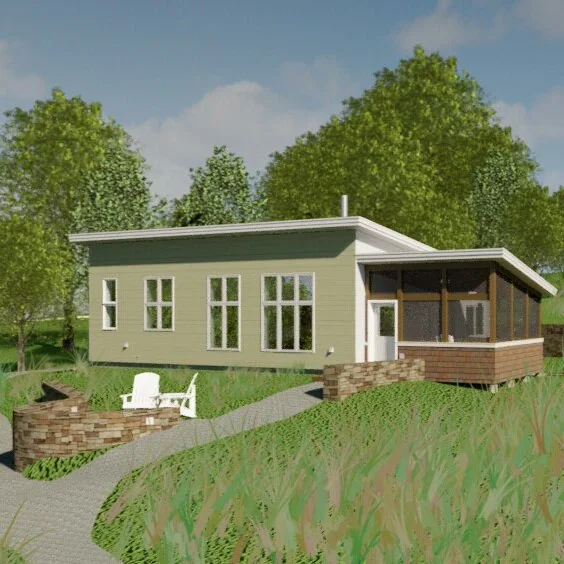
Daytime rendering view of home facing west to mountain views.
Mountain meadow net-zero ready | A Vermont case study
A client sought us out to adapt our ZigZag House2 home design for her property in Northern Vermont. For her, the 1,000 square foot 2-bedroom single-level home was a great starting point but she wanted to adapt to better suit her needs. A home-based writer, she wrote in a small specially design cabin bucolically…
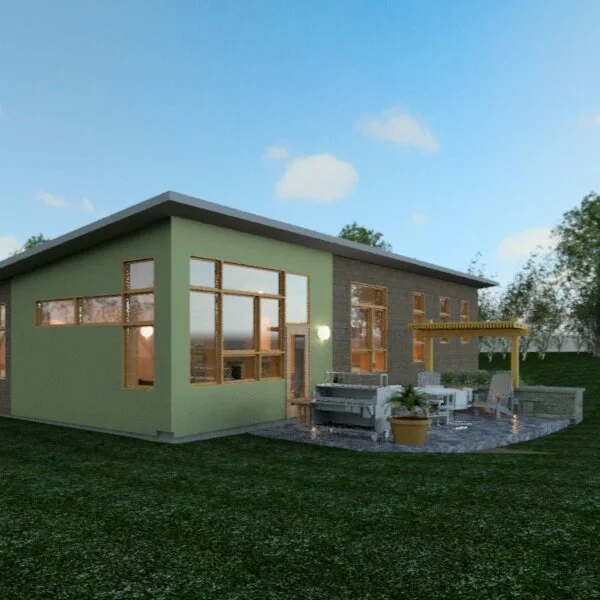
View of the living area and outside terrace.
inside out home - net zero ready prototype
A single-story three-bedroom home design designed for open-plan living and connection to nature through every aspect of this small home. Walking up to the home you experience an open loggia entry with an overhead skyspace court leading to the front door. Inside find a tasteful sequence of private and public areas.