
The Generational Power of Home Addition Design in Vermont
In recent years, many of our clients with growing families in Vermont face a daunting challenge: They need more space for their families, but buying a new home is often too expensive in the towns and cities they live and their choices for home addition design and renovations are unclear to them. There is also a lack of housing supply so dramatic it may take a generation to catch up. So is buying land, designing, and building a new home. Many have low mortgage rates on their current homes locked in before the pandemic. They can't afford new properties now due to their inflated costs and high mortgage rates. Older Vermonters close to retirement, living in their long-time home, that want to downsize and live in their community also do not have many options. The costs don’t match Vermont salaries or fixed incomes. Often our clients feel they have few options. We think there is a silver lining.

By the Numbers
Our existing housing is mis-matched with those who will live in them, especially single-family homes. Opportunity awaits!
Home addition and renovation design opportunities
Why not turn to your existing home and property instead as an opportunity to explore? After all, it is usually a family’s biggest asset. Scott Galloway, in The Alegebra of Wealth, A Simple Formula for Financial Security, says “Historically, residential real estate has been a good investment of the long term….Owning a home is also a committment to economic security and stability.” Adding on and renovating a home rather than seeking to buy, build, or move elsewhere may be an easier option to consider with those other barriers in mind. Doing so may also produce positive generational impacts for you and your family. Let’s take a look.
Mindset shift: The draw of Vermont and the benefits of home additions and renovations
The families and individuals we work with often have extended family nearby, be they aging parents, kids with grandchildren, extended family, or other siblings. And or they are firmly rooted in the community life they hold dear. For many, moving out of state or to another community is a dealbreaker. Or they just want to stay in Vermont because they like the quality of life, outdoors, creative economy, or see the state as a climate or political haven.

Today’s younger generation often can’t afford to save for down payments for their own home or earn incomes high enough to buy on their own. In many cases it is more practical for multiple generations to live together. Or adult children boomerang back home after college or after living in another city becomes too expensive. For Adult children to inherit the home and property of their parents is often the quickest way to build generational wealth.
Modern-inspired additions and major renovations are environmental positives through adaptation, reuse and renovation. The embodied energy and carbon of the existing home construction stays in place as compared to intensive and disruptive all new construction, carbon costs of new materials, work on a custom home site needing tree clearing, land work, driveways and so on. By staying put, families help build up density rather than expanding into sprawling development into outlying rural areas. This deepens rather than fragments community connections.
With all those benefits in mind, how to figure out if your home or one you seek to buy, is a good candidate for an addition and or major renovation beyond talking with a realtor and their knowledgeable team? Who else can you turn to better understand your options and do your due diligence on what is usually one of the largest investments of your life? We suggest you turn to architects like us. We can add a lot of value early on in your pre-purchase planning journey as well as after you close on the home and want to develop a plan for success!
Arocordis Design constantly gathers current data on home remodeling and addition trends both locally and nationally. Costs per square foot of additions and major projects are much higher today than they were 10-15 years ago here in Vermont so it pays to be realistic about your expectations about return on investment, especially over shorter-term time horizons. These are not ordinary times with the scarcity of housing stock and high home prices.
With adding on extra space and functionality, homeowners still need to look at all the factors and make the best decision for their situation and expected time frame. We often advise our clients to talk with local realtors as well about the suitability of doing major additions. Note, we cannot predict future resale value and return on investment of additions and renovations but we at least can supply you with the best available information today as part of the team that supports you in making these decisions.
Work with an architect to assess your property for home addition and renovation suitability
Noting the caveats and disclaimer above, when we work with our Vermont clients, they usually come to us with specific goals in mind. Those can include combinations of the below:

A recent new bedroom addition in Calais, Vermont.
Ground-level main-bedroom suite addition for aging in place, or aging parents,
Kitchen and dining area expansions for multiple generations to cook and eat together.
Home offices
Wellness and therapy spaces,
Reconfiguring to add more secondary bedrooms
Adding a new expanded living area,
Porches, terraces,
Garages with bonus features like apartments, family room areas, makerspaces, workshops, and or extra storage,
Adding a separate Accessory Dwelling Unit (ADU) or a small-footprint home for visiting family and or rental income purposes,
Separate art studio or maker spaces.
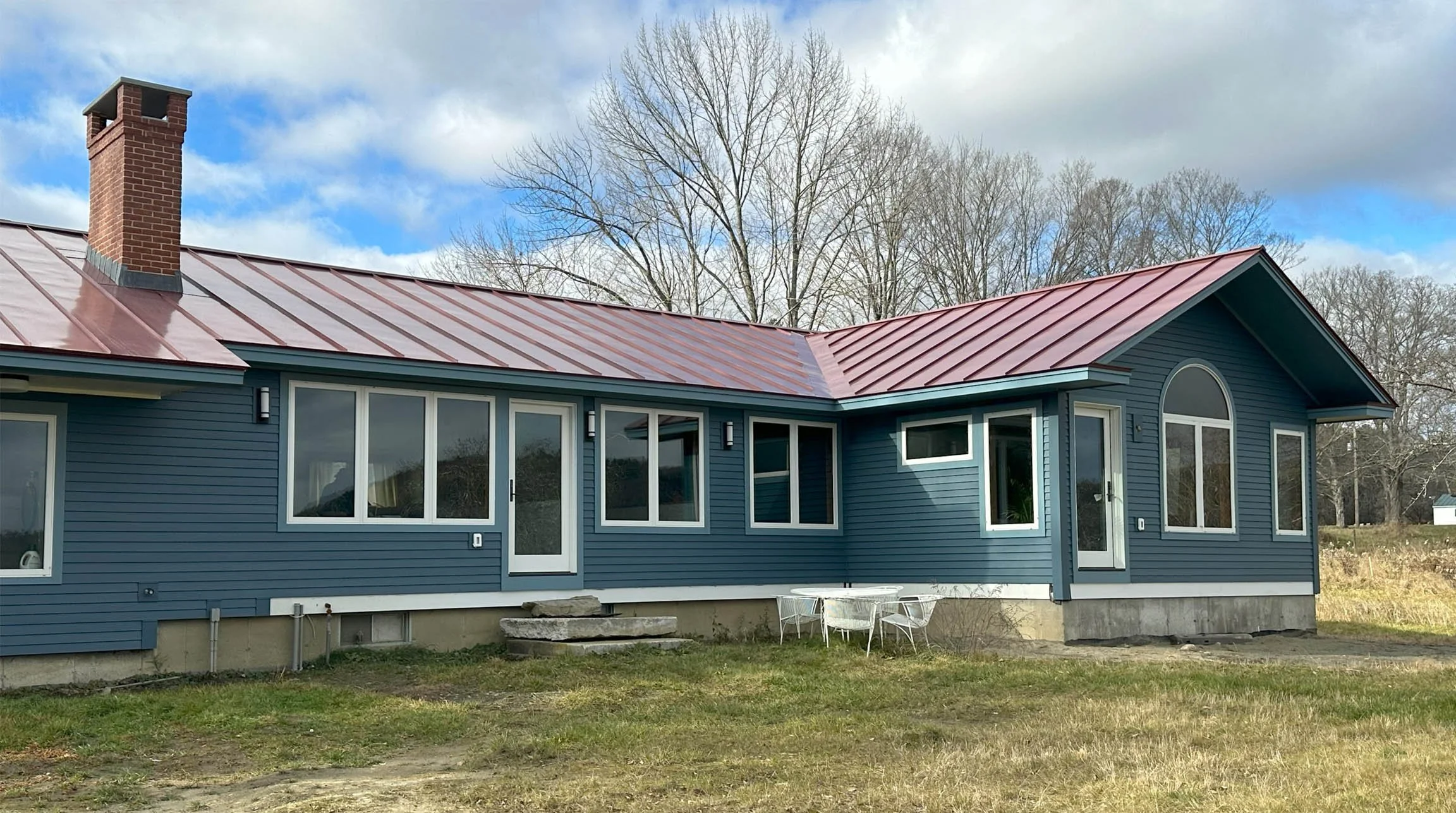

Recent addition to a 1940’s era gambrel home in Montpelier, Vermont.
As Vermont architects, clients will come to us full of ideas like the above and more but need our help to assess the suitability of their home and prospective property for adaptation and major changes to them. We use our creativity and experience in the early residential architecture planning stages, whether before closing or after in the first phase of design and offer advice and coaching. We often follow the below process, or adapt the framework to the opportunity and client needs:
Kick off the project with an onsite or virtual online meeting: Discuss more completely any information shared from their answers to our online planning questionnaire and intake form.
Establish a time horizon: Is the current home their forever home or one they plan on selling in the next five to ten-years? Or pass along to future generations?
Determine key goals and objectives: We ask them to imagine their home when all the work is done, how would it function differently than today? We identify their sustainability, energy efficiency, and healthy living goals. What does success look and feel like? What are their priorities?
What design style, mood and character fits their home and their lifestyle? How does it match or differ from what they have today? What inspires them or brings them joy? We will do mood or precedent example image collections. Mountain modern, modern farmhouse, Vermont vernacular and contemporary design with a fusion approach - all are possible. Nature near design with clear indoor and outdoor relationships, captured views near and far all can resonate.
Establish a working budget and learn more about their funding approaches, and if any phases are required. A critical step.
Assess local zoning and environmental requirements as pertains to making changes. Determine what is possible and reasonable to do with the overall property.
Review any existing energy or weatherization audit report information. Or the client works with an Efficiency Vermont certified professional to conduct one with blower door tests to benchmark existing performance with a report about the house and its systems.
From their initial lists of wants and needs, develop a space and site space program to use to create design concepts from.
Collect data and measure the key areas of the house to aid design concept studies. This may involve creation of a digital double of the home for later planning and design work with our building information modeling (BIM) design software.
Develop 2-3 design concepts using the space and site program. This may include 3-d visualizations or hand-sketches, diagrams, site analysis and site plans. Here we also identify pros and cons of the design ideas for the clients to assess.
Create a concept level house plans with a unified design direction, help them find builders. Do a planning level budget based on costs per square foot and difficulty factors unique to their home and property. Explore next steps as suited to the client and project.

Detail section drawings of the Lake Champlain Carriage House from 2018
Wrapping up
With the process steps above we can aid our families to help them create new possibilities and a vision for their existing homes and property. If the direction is promising and the value clear, they will ask us to take the next step into detailed design with a builder on board that we help hire, and if all goes smoothly, into construction.
In this way we can help our clients explore the benefits of adding onto and or renovating their home to benefit them in the here and now, but also for the generations to follow.
If you want to learn more about our firm, please click on the contact us button on our website or visit our portfolio pages. Feel free to leave comments and let us know what you think. We always appreciate hearing from readers.